Beginner’s guide to Grand Teton National Park

I remember seeing Grand Teton in a textbook as a kid. The image of the super rugged but also beautiful snow-capped mountains was so striking. The Tetons seemed like they were on another planet that I’d probably never get to. I think eight-year-old me would be pretty excited to know that I finally did get there two decades later.

But three days were not enough! Okay, it was wonderful and amazing and a blast, but I wanted to stay longer and/or come back immediately. Here’s how we spent three days in Grand Teton, plus what I would do differently. (Don’t forget to add on a visit to Yellowstone National Park)

The best time to visit Grand Teton

Hands down, September. My partner and I arrived September 12 to significantly less crowds, sunny and 70 weather, and the leaves starting to change. It was chilly overnight (high 30s), don’t get me wrong, but totally doable to camp with warm clothes and a decent sleeping bag.

Where to stay

We camped at Signal Mountain Campground because it’s the most centrally located. We were originally disappointed that Jenny Lake was closed due to construction for most of 2018, but once we actually visited Jenny Lake we were so glad we weren’t camping there. It’s SUCH a popular area that it felt super crowded and a little touristy (yes, I realize I’m *also* a tourist). Signal Mountain felt much quieter and laid back. I wrote a full guide for Signal Mountain Campground that you can find here.

We splurged (it was our anniversary) on a private cabin at the Signal Mountain Lodge for the last night of our stay. The cabin was an awesome combination of staying somewhere that felt cool and outdoorsy…but also having a ballin’ hot shower. If it’s in your budget, I highly recommend it.

The closest town is Jackson. It’s nice, but pricey. If you’re going to spend all that money on a hotel, you might as well stay at one of the lodges in the park.

Our three-day itinerary

We could have easily spent an entire week there exploring. There are tons of beginner-friendly options (and you know they’re beginner-friendly because I had altitude sickness the first few days we were there!).

Day 1

Taggart Lake Trail (option to add Bradley Lake): This 3.3-mile round trip hike has ridiculous views of the Tetons themselves without any super steep hills. Because of that, it’s a popular option. We got there mid-morning in September and the parking lot was juuust about full (another great reason to visit in the fall). We didn’t feel overly crowded on the trail or at the lake, and I preferred having some company because I was really freaked out about bears.

teal-colored water reflects the bright blue sky on a lake surrounded by rugged mountains and evergreen trees
The view from Taggart Lake

You have the option to add on a 2.5-mile loop to Bradley Lake, which was beautiful but a little more steep and much more quiet, which at times made me nervous. I should note we saw literally zero bears on any hike, probably because I insisted on making so much noise to ward them off.

Sunset on Jackson Lake: From the south side of Loop 3 of the Signal Mountain Campground, there’s a short trail that takes you down to a beach on Jackson Lake. It’s about a 10-minute walk, and easy enough to drag a camping chair with you to watch the sunset behind the Tetons.

Day 2

Canoe on Jackson Lake: My legs were quite tired after our Taggart-Bradley Lake hike, so we took a day off of hiking to get out on the water. My arm strength is mediocre at best, and canoeing was still really fun. You can rent a canoe at the dock behind Signal Mountain Lodge for $25/hour. Being out on the water gives you a whole new, incredibly cool view of the mountains. Make sure to bring a sweatshirt and sunglasses!

woman canoeing on Jackson Lake in Grand Teton park. The lake lays out ahead of her, bordered by the Grand Tetons under a bright blue sky.

Dinner in Jackson: Jackson is a fun little mountain town that definitely warrants a visit while you’re in Grand Teton. We had some fantastic tapas and wine at Bin22 before walking around town to take in the sights. Don’t miss the photo op with the antlers at the town square!

Evening Wildlife Watching: Bonus of being in Jackson in the evening? Driving back at dusk is the BEST wildlife watching time. We took the scenic route back on Moose-Wilson Road. The name absolutely delivered with some amazing moose sightings, plus we saw pronghorn, mule deer, and a HUGE bull elk with his harem of ladies all on the drive back to the campground.

Day 3

Flightseeing with Fly Jackson Hole: Originally, we were supposed to do this after dinner on day two, but the weather had other plans! This was also a splurge since it was our anniversary, and totally worth it. Sunrise was beautiful, our pilot was super knowledgeable, and the views were unforgettable. Flying in a little tiny plane also wasn’t nearly as scary as I thought it would be. I felt very safe with our pilot and the flight wasn’t bumpy at all.

an aerial view from a flightseeing plan of Grand Teton National Park. the park's biggest lakes and evergreen forests stretch out in front of the rugged mountain range in the early morning light
Grand Teton from the air

Mormon Row: We did a drive-by of Mormon Row, which was all I needed. My partner is a little bit more of a history buff and I think he might have liked to walk around and look at more of the buildings. We accidentally continued on 191 instead of getting back on the main park road, but that turned out to be a really beautiful drive with lots of great overlooks.

Hidden Falls and Cascade Canyon: Cascade Canyon is a very long backpacking trail (12 miles total) from the opposite side of Jenny Lake, but since it’s an out-and-back, you can just turnaround whenever you get tired. This hike was really high on our list because of all the rave reviews we saw, but due to construction in Fall 2018, a short hike wasn’t possible. The bypass alone was going be to several miles, so if you don’t want to do at least five miles of hiking round trip, I would recommend skipping this area altogether until construction is complete. The ferry ride across Jenny Lake was fun, but the trails are PACKED.

Jenny Lake Loop: We decided to hike back from the ferry drop-off around the west side of the Jenny Lake Loop, about two miles back to the South Jenny Lake parking lot. There are beautiful views, but it was so crowded it was hard to enjoy them because you’re constantly letting people by you on the trail or stuck behind people slower than you. The rangers at the visitors center were, however, fantastic. And it has great souvenirs!

a man stands in front of a large mountain lake, framed by evergreen trees and a bright blue, cloudless sky jenny lake hiking grand teton national park
The view from just around the corner from the visitors center. Just walk there from the visitors center to take it in instead of messing with the ferry and crowded hike back.

Moose Ponds Loop: In an attempt to escape the crowds, we added on the approximately one-mile total Moose Ponds Loop as we were hiking around Jenny Lake. Huge mistake. The second half of the loop is just wandering around in a sea of tall, dead grass. You end up walking by the road. It got SUPER hot and there was no shade.

Dinner at Signal Mountain Lodge: For our last night in Teton, we had our anniversary dinner at the lodge. Both restaurants had surprisingly good food and just incredible views looking out over Jackson Lake, and the nicer of the two options was also delicious without being horrifically over-priced. Plus, I’ve always wanted to go to a nice restaurant where it’s also totally acceptable to be in hiking clothes. The dream!

What I would do differently

First, stay longer! There were a ton of other hikes that looked really interesting, including Phelps Lake.

I also would’ve just hit the visitors center at Jenny Lake to get some intel from rangers and then not come back to the area to avoid crowds. Unless…I was prepared to get into a longer hike to Cascade Canyon. My legs were really tired from Taggart Lake, so I would’ve started with a big day to Cascade and then taken it easy with the other hikes.

Technically, we missed the actual sunset on Jackson Lake our first night. I was in an anxiety spiral about our nonstick pan that was now not nonstick. I was determined to make dinner in it, even though it wasn’t working because everything was just sticking to the pan and nothing was cooking.

Billy was totally willing to help clean or just chuck the pan in the car and forget about it, but I got obsessed with the pan not working and took too long so we missed sunset. So, yeah, take a deep breath and let it go so you can make it to sunset!

Panic attacks aside, Grand Teton was one of my favorite national parks. Yellowstone is amazing for Old Faithful, Grand Prismatic Spring, Lamar Valley, and other iconic sites, but I would go back to Teton again and again. Leave any questions in the comments section – I’m all too happy to relive the trip and help you out.

Just *after* sunset but still pretty

Beginner’s guide to staying hydrated while hiking

Staying hydrated is one of the most important ways to make sure you enjoy yourself outdoors, no matter what season it is. Hiking is 100 times more enjoyable when you have water…and you actually remember to drink it.

I can’t even count how many times just drinking some water has taken care of feeling like crap when hiking. This is particularly important somewhere dry like Colorado, if you’re hiking at higher altitude, or if you’re hungover (or, god forbid, all three).

And don’t let cold weather fool you into thinking you don’t need to bring water with you. It’s extra dry already, and your body uses up a lot of water to heat up the freezing cold air that you breathe in all winter long, making hydration a year-round priority.

Bringing water with you isn’t exactly rocket science, but buying a reusable bottle or using a reservoir will be more cost-effective in the long run, cuts down on plastic waste, and allows you to bring much more water with you. 

Types of water bottles

REI has a million options, and if the amount of options on that webpage overwhelms you, don’t worry, you’re not alone.

The orange bottle on the right is a Nalgene. This is a common style, but I also commonly spill water all over myself when I drink out of them.

The basic Nalgene-style bottles are typically the cheapest, but I usually end up spilling water all over my face because of the wide opening. Fortunately, Nalgene makes a narrow-mouth model. Nalgenes are buy one, get one free at REI for Labor Day 2020!

Camelbak’s Eddy bottle is one of the few allegedly spill-proof bottles with a straw. I used to love Eddy’s but mine have continuously leaked badly over the last few years, so I’ve given up. Baby OB has a child’s Eddy that so far doesn’t seem to have the same issues, but only time will tell!

Collapsible water bottles, like the one in the foreground of that photo, are a great option because they take up less space as you drink more water.

But everyone has a Hydroflask, should I get one?

Having an insulated water bottle like a Hydroflask (or Yeti or Takeya) can be nice to get your drinks hot or cold. However, they are MUCH heavier. I have a Takeya water bottle that I carry around home or throw in my running stroller, but it’s too heavy to take hiking.

Unless you’re camping or looking for a coffee mug, you likely don’t need to spring for something insulated.

(Personal note: I find it infuriating that Yeti charges $40 for a coffee mug that still, by their own admission, leaks, so I refuse to buy anything from them now.)

What if I need more water than fits in a bottle?

If you’ve decided to like hiking enough that you want to go for a few hours or several miles, you can also consider getting a bladder (also known as a reservoir, but I think bladder sounds funny).

e8035-how2bto2bstay2bhydrated2bwhile2bhiking2b3

These are awesome because you don’t have to reach back into your backpack thanks to the handy dandy straw. You can bring more water with you as well, and it doesn’t take up much extra room in your pack. I compared multiple models of reservoirs in this blog.

Is water all I need to drink?

If you’re going to be sweating a lot, consider adding an electrolyte to your water. I love Vitalyte because its taste discrete and the product is overall very cost-effective. I had some issues with fainting a while ago, and still have what some might call a delicate system, and Vitalyte has become my drink of choice to keep any light-headedness at bay.

I’ve also tried Clif Shots, but they are much more expensive and the flavor is way more noticeable. I haven’t tried Nuun or Tailwind because of their price. I’ll stick with my bag o’ Vitalyte in the meantime.

If you prefer pre-made sports drinks, at least try Gatorade Zero, since it has less sugar. I have nothing against Powerade, except for I threw up right after drinking it once and the blue flavor came up black. It was necessary to share that disgusting story with you to explain why I will never drink Powerade again. I could be biased, but getting your wisdom teeth taken out is traumatic enough without that experience added on.

Now that you’ve got that image in your head, get out there and recreate safely! Staying hydrated is key to enjoying yourself outside, so don’t skimp on the water and have fun out there.

You missed the point of this blog.

When people have talked to me lately about Outdoor Beginner, I’ve noticed more and more often they say some variation of “I love your blog, but I could never do that.” Or, “I’ll never be at your level” or, “what you do is so far beyond me.”

And if you think that, you’ve missed the point.

The reason this website exists is to encourage other people to try new things, even if they seem scary, impossible, or totally out of reach. Even if there’s “no way” they can do it.

I mean with that attitude, definitely, there will be no way you can do it. But I started Outdoor Beginner to take down that exact line of thinking. By breaking down the outdoors into less intimidating baby steps. By showing you that you can try something new. By giving you advice as someone who is/was also terrified of everything I’m writing about.

All of the things I’ve tried and written about (rock climbing, ice climbing, snorkeling, trail running, skiing, the list goes on) I did because I decided to swallow my fears and just TRY them. Just to see what would happen.

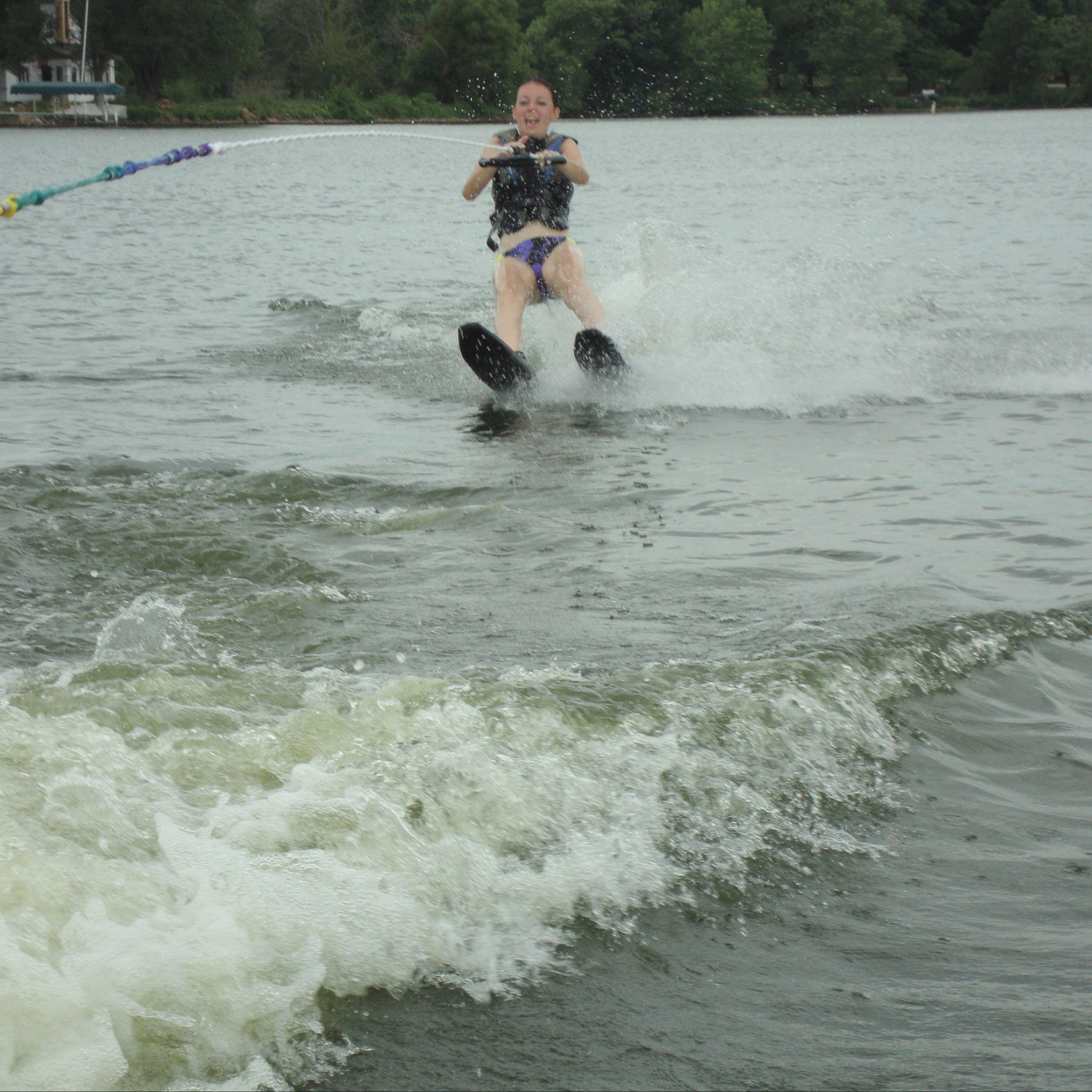
Learning how to water ski in 2012. Photo by my adoring husband. The first time I fell I realized I wasn’t going to die, and then I was really determined to figure out how to get up.

I have a fear of heights. And open water. And I’m generally a scaredy cat. But I tried rock climbing, I went snorkeling, I took a ski lesson and then took lots and lots of baby steps to finally feel confident three years later. And most importantly, I started realizing that a lot of things are much more doable than I had originally thought, and I wouldn’t have been so scared if I had another first-timer explaining to me exactly what things would be like.

So I started Outdoor Beginner.

A fear of getting started is normal. But this website is a place where you can set aside your fears and realize that you can baby step your way into things you’ve always wanted to do.

My first time skiing. I ended this day crying and scooting down the mountain on my butt while my husband walked my skis down. But I got a taste of something I liked, so I slowly working my way up to more skiing. I turned that into a beginner’s guide to skiing Copper Mountain that you can read here.

Outdoor Beginner is a place where you can see that you don’t have to be hardcore to be outdoorsy. A place that makes you feel comfortable, where you can get the information you’re actually looking for to feel like you can try something too.

I will absolutely acknowledge that I have the privilege of being white and having the skinny tall body type that dominates outdoorsy and fitness images, so I didn’t ever have to worry that I would stick out. Clothes at REI fit me. People in the park looked like me.

But I don’t have a magic formula for trying things.

I don’t have some superhuman strength or skill that allows me to do the things I love. I just tried things I was scared of. I decided I didn’t want to miss out on things I’ve “always wanted to do” just because I was a little nervous. Then, I started small. I put myself out there. I occasionally shed some tears.

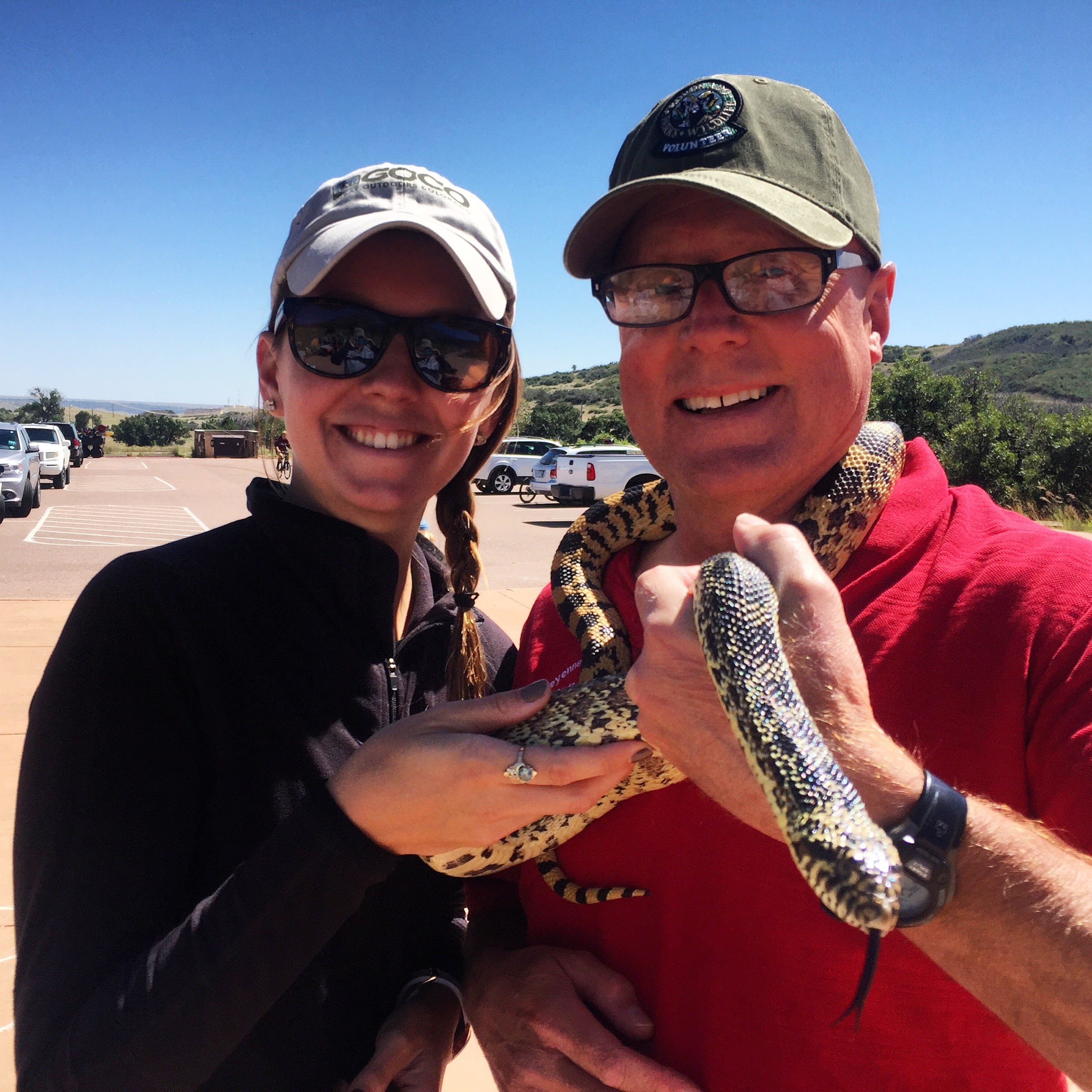
I’ve been terrified of snakes my entire life (I once had a panic attack at the zoo when I rounded the corner and unexpectedly was at the anaconda exhibit). I was at a work event at Cheyenne Mountain State Park and they brought out their pet bull snake for the kids to meet, and after watching about three dozen second-graders hold Chance (the snake) and have a blast, I thought it was time to put my big girl pants on.

This spring, I’m running a half marathon.

Partly, to prove to myself that I can do more than I think I’m capable of. I am equally guilty of thinking I “could never do” something like a half marathon.

But one day, five years ago, I decided to try to run around my block in Denver. I didn’t make it all the way around. I felt like I was going to puke. But I knew that it would always be that hard and unpleasant if I didn’t keep trying. And the first few steps did feel good before the nausea set in. And I wanted to be a runner, dammit.

Eventually I could run a few blocks. Then a half mile. Then a whole mile. Then up the hill at a nearby park. And a few months later I ran my first 5k.

I may have bigger goals now, and technically speaking, may be more of an Outdoor Intermediate. But I am intimately familiar with how hard things are when you start out, how scared and self-conscious you feel. How you’re not sure what information to trust because the people writing them aren’t newbies like you are.

And I also know the feeling of doing something you didn’t think you could. That satisfaction of realizing you’re doing something you couldn’t do last week, last month, or last year. That you pushed past your fear to get what you wanted. It’s a real good feeling. And I want you to have it too.

So don’t look at this blog and say, “I could never do that.” You absolutely can. You just have to decide to start.

The first time I tried rock climbing. I’d always wanted to try it even though I was scared of heights. Shortly after this photo, I realized just how scary it was going to be to come down and started panicking. Obviously, there is only one way down, and eventually I got there and then really enjoyed my second time up. Entire blog is here.
The first (and only) time I tried mountain biking. Another thing I’d always wanted to try. I ended up not liking it and fell off the bike once, hiked with it a ton, and ultimately was happy I tried it so I didn’t have to wonder anymore whether I would like it.
I knew I wasn’t a good enough swimmer to snorkel in the ocean and still enjoy it, so I swallowed my pride and donned this beautiful life jacket for our snorkeling trip in Belize. I was the only adult and looked ridiculous, but I enjoyed the entire trip and felt super safe because of it! Blog about my first time snorkeling here.

Beginner’s Trail Guide: Mystic Falls at Yellowstone National Park

There is no shortage of waterfalls in Yellowstone National Park, but if you’re looking for a shorter hike that’s beginner-friendly, Mystic Falls is your best bet in the southwest section of the park.

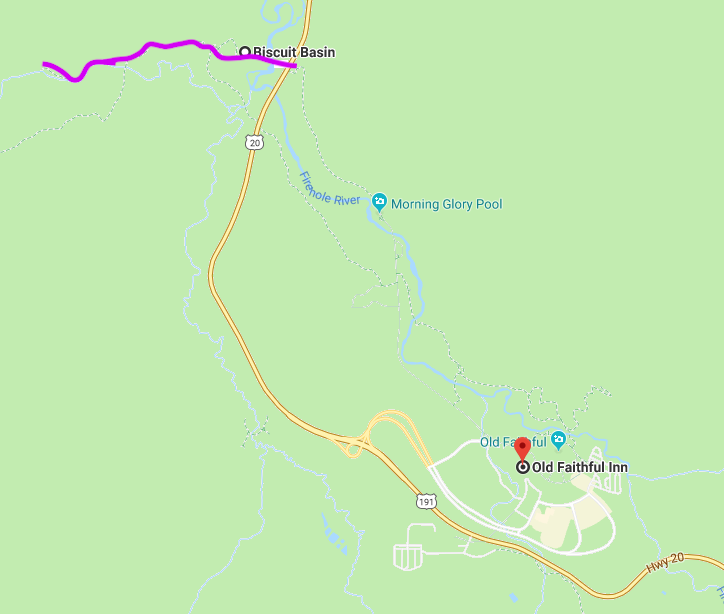
The trailhead is located at Biscuit Basin, a 10-minute drive from the Old Faithful Inn. After 2.5 miles (round trip), you’ll have seen a spectacular waterfall, hike along the Little Firehole (best name ever) River, and only have had to deal with rolling hills to get there.

How do I get there?

screenshot of google maps route shows the short distance between old faithfull inn and mystic falls

The Mystic Falls trailhead starts at the far end of the Biscuit Basin boardwalk. It’s most convenient to Old Faithful Inn on the southwestern side of the park.

The drive from Old Faithful is short (less than 10 minutes), and the entire way is paved and easy to navigate.

green yellow and orange colors burst from a deep hot spring in biscuit basin at yellowstone national park. trees and mountains surround the edges of the geyser.
Biscuit Basin is also pretty cool on its own, so make sure to do a lap around the boardwalk while you’re there!

Where do I go?

There is a fork in the trail shortly after you leave the Biscuit Basin boardwalk and start hiking on the unpaved trail. Go left for to go to Mystic Falls – it’s not particularly well marked, so keep an eye out.

The trail is an out-and-back, meaning you hike to the falls, turnaround, and walk back on the same trail. The average person walks about two miles per hour, so this hike should take you between one and two hours.

The entire hike is rolling hills and very beginner-friendly since the trail is wide and well-maintained. You’ll have a little bit of a steep drop-off on your left when you’re hiking out because the river is off to that side, but it’s nothing precarious. I was getting over altitude sickness and, with the help of hiking poles, was totally fine.

woman hiking on trail through pine tree forest next to a river on the way to mystic falls in yellowstone national park
I have a complex about looking dorky when I use hiking poles, so I was for some reason convinced I would look less dorky with just one. Goals for the new year include getting over myself.

What should I wear and bring?

Anywhere you hike in Yellowstone, you should have bear spray with you as a precaution. You can buy it ahead of time or rent it at a number of stores in the park. You probably won’t use it, but you should always bring it with you and know how to use it so you don’t accidentally spray yourself (or your spouse) in the face.

Sidenote: I saw a reminder in one of our guidebooks that bear spray does not work like bug spray in that you DEFINITELY don’t want to spray it all over yourself to repel bears. I thought it was a hilarious tip, but just in case you were unsure…you use bear spray to spray a bear that is too close or being aggressive, you don’t put it on yourself. That would be very painful.

I hike the trail in mid-September, and the weather was delightful. We didn’t get a very early start, so it was already in the high 40s or mid-50s by the time we started hiking. The trail is pretty sunny, so I was actually a little hot in long sleeves and pants. In the summer, I’d imagine it could get quite warm.

a couple in hiking clothes pose for a picture in front of mystic falls, a large waterfall in yellowstone national park
Extremely excellent photography by a rock (aka that blurry blob at the bottom of the photo). My legs were also very awkwardly positioned so we were actually on the verge of falling over in this photo.

For more information on what you should bring hiking no matter what trail you’re on, read my previous post here.

I decided to wear hiking boots instead of sneakers because I prefer the extra ankle support. However, my husband wore trail running sneakers and was totally fine. You don’t have to cross water at any point, so you don’t need waterproof shoes. There also aren’t any super rocky sections until you’re right up against the falls at the end, and you don’t want to be clamoring around on rocks next to a huge waterfall anyway.

Is it crowded?

In the summer, everything is crowded all the time in Yellowstone. It’s what you’re signing up for. And why we went in the fall.

Biscuit Basin was pretty busy when we got there mid-morning, but we were actually totally alone once we were on the Mystic Falls trail. We saw one other couple after hanging out at the falls for a little while. That’s pretty common for Yellowstone – the vast majority of visitors don’t go past the parking lot/paved section of the trail.

Anything else I should know?

It’s highly unlikely you’ll see a bear, but it’s important to know what to do if you do. Yellowstone’s website has great resources. In general, give all wildlife (even the non-carnivorous ones) lots of room and never get too close. We saw a few raptors (we couldn’t tell if they were hawks or eagles or falcons) but otherwise didn’t see any other wildlife on the trail.

The only time it’s okay to get off the boardwalk around the geysers is when you’re getting onto another marked trail. It’s very obvious where the Mystic Falls trail starts, so there is no excuse for randomly wandering into the geysers. It’s not only dangerous (you do not want to fall into one) but also damages the delicate habitat around the geysers if you go off the boardwalk, so just don’t do it.

Overall, I loved how beginner-friendly Mystic Falls was. We had originally planned on doing a longer hike to Fairy Falls, and when I got hit with altitude sickness I was so disappointed and worried we couldn’t still do something cool. Mystic Falls was exactly what I needed, plus, there are only so many geysers you can look at before you need to mix it up.

If you’re in the northeast section of the park and looking for beginner-friendly hiking near Lamar Valley, take a look at my trail guide for Trout Lake.

Beginner’s Campground Guide: Signal Mountain at Grand Teton National Park

Like Yellowstone, cheap hotel accommodation is not Grand Teton’s specialty. The Signal Mountain area of the park is home to both a campground and a lodge, both of which are awesome, and one of which I would consider affordable. It’s fun to splurge, but so is camping and saving some dollar bills. Signal Mountain Campground ended up being one of our favorite campgrounds ever thanks to its overall convenience and how incredibly pretty it is. 

Being conveniently located to amenities like showers, restaurants, and wifi usually comes at the price of beauty, privacy, or both. Not at Signal Mountain. Like at every national park, not all the campsites are particularly private, but they are all nestled into an aspen and pine tree-filled forest, so it’s hard to complain.

If you’re planning a trip to Grand Teton, do your absolute best to get a spot at Signal Mountain. It’s much less touristy feeling than Jenny Lake (which is also under a lot of construction as of fall 2018) and open later in the season (which if you hate crowds is the best time to go).

Directions

Grand Teton National Park is in southwestern Wyoming, and Signal Mountain Campground is a 15-minute drive from the Moran entrance to the park. This is where you’ll likely be entering the park if you’re coming from the east or south. Signal Mountain is an eight-hour drive from Denver and an hour from the southern entrance to Yellowstone National Park.

Except for the road that loops through the campground, all of the driving is on paved roads. The road around the campground is well-maintained, so you don’t need a four-wheel drive vehicle to access it. The campground is located right on Jackson Lake, the largest lake in the park.

Campsites

The campground is fairly small, with one main loop and one generator-free loop, which is where we stayed. I would highly recommend doing the same if you are camping in a tent. It’s a nice separation from folks in RVs and therefore way less noise.

Every campsite has a fire ring and picnic table, but privacy varies a lot, so we were thrilled when we found a campsite surrounded by aspen trees and up a little hill from the campsite next door. The area for our tent was away from the fire ring and the road, back in a little grove of aspen trees that in September were starting to turn golden. It was everything I think of when I picture a perfect campground. Plus, it was right by a trail that goes down to the lake, so we could easily drag our camping chairs down to the shore for some sunset beverages.

Firewood, kindling, and almost anything else you need can be purchased at the general store next to the lodge. Don’t let the small size fool you! It was surprisingly well-stocked with batteries and all kinds of gear, plus yummy food and a great beer selection. You can also get gas at the general store and pick up the lodge’s free wifi. This is all a five-minute drive from the far end of the campground, but totally hidden from view and not overly lit, so it doesn’t take away from your experience of being ~one with nature~.

Campground Fees and Reservations

You can’t reserve a campsite at Signal Mountain. This is actually the case for every campground at Grand Teton. There was significantly less competition for a site when we visited in late September. We arrived on a weekday and there were still spots available by 4 or 5 p.m. But Friday morning when we left, the campground filled up by 10 am.

If you can’t get there early enough in the morning (we left Yellowstone before sunrise to make it), book your first night at a hotel and drive in as early as you can the next morning. You can always nap in your tent once it’s set up, after all! Lodging options include splurging on the Signal Mountain lodge or looking into hotels in Jackson or Dubois (about an hour away).

When you arrive, there’s an office on the right where you pay. Campsites are $32 per night for tents as of fall 2018, and payable by cash or check. That’s right – no credit cards! Bring cash with you, but in case of emergency, there’s an ATM at Signal Mountain Lodge right around the corner. 

You’ll also need to purchase a national parks pass at whichever entrance you come in. You can pay with a credit card, and there are a few different options. Information about all the passes you can get are here on Grand Teton’s website.

Toilet Situation

Most excellent!! Electricity, flushing toilets, running water, the whole nine yards. Showers are in a separate building than the main bathroom and aren’t included in your campsite fee.

You’ll also need some cash money if you want to shower because you have to feed a token machine at the laundromat (all in the same building and very close together).  For $6, you get about ten minutes. I purchased extra time in the shower and ended up not needing it, even though I took my sweet time under the hot water.  You get your own bathroom, so the whole shower/sink area is private and very well heated. Everything was super clean and the water got hot immediately.

Nearby Activities

You’re in a national park, so you do not need to worry about being bored! The trail to hike up Signal Mountain is walkable from the campground, although we didn’t do that one. We did take advantage of the dock/marina back by the lodge and rented a canoe to paddle out onto Jackson Lake. This was super fun, beginner-friendly, and pretty affordable at $25/hour for the canoe rental.

The Taggart Lake trailhead is about 40 minutes from Signal Mountain Campground, and the also super-popular Jenny Lake is about 10 minutes closer. The town of Jackson (which is really fun to drive into one night!) is about an hour. All of these places are off the same main highway that runs through the park, so everything is easy to find and the driving is all on a paved, flat road. You’ll likely get cell service for Google Maps-ing once you get to the southern entrance closer to Jackson, but otherwise, you’ll need to connect to the wifi at the lodge or download the maps for the area for use offline – a handy feature of Google Maps.

Other Intangibles

The only less-than-ideal part of Signal Mountain was the dishwashing situation. I got spoiled in Yellowstone with the fancy dishwashing rooms, and at Teton there was a communal bucket you had to fill up with (ice cold) water and do your dishes in the bucket. It was a little too narrow to really fit a dish and a scrubber and your hands in the bucket, plus it was a pain to drag everything around. Annoying, but in no way a deal breaker!

Ok, let’s talk bears. I’m terrified of them (working on that) but we didn’t see a single one in Teton. Well, we saw a grizzly from the road between Teton and Yellowstone. But the rangers warned us about a family of bears living at the campground and neither my husband nor I saw them once, even when I went to the bathroom late at night.

You should still take bear safety seriously, though, and follow rules for food storage, take bear spray with you hiking, and make lots of noise (note: bells are not a good bear deterrent). We definitely were on our own a lot more often than when we were while hiking in Yellowstone, and I was honestly surprised we didn’t see bears on a few of our hikes. It was probably because I insisted on scream-singing the entire time just to make sure. You could probably ratchet it down a few notches and be fine. 

We ate at both restaurants at Signal Mountain Lodge (Trapper Grill and The Peaks Restaurant), and both had very good food, but the Trapper Grill was a better value and both had beautiful views. The free wifi was also super clutch for checking our pet sitter’s updates and downloading more books for my Kindle. It was hard not to be on my phone more often when we were at the lodge, so do your best to stay unplugged!

Overall Impression

Jenny Lake is another popular camping area in Grand Teton, but after spending the day there, we were very relieved we had chosen Signal Mountain. There are more dining options (of varying prices points) and you’re much more off the beaten path. Obviously, you’re in a national park, so it’s going to be busy, but Jenny Lake was SWAMPED with people (and currently under construction). 

Signal Mountain felt a little less touristy (I know, I know, we’re all tourists) but still had all the conveniences you needed. The campground is secluded, beautiful, and a must-do for anyone planning a trip to Teton.

orange tent surrounded by aspen trees beginner camping grand teton