The Manitou Incline, or just “The Incline” as it’s more commonly known, is one of the more famous (infamous?) trails in Colorado. But it’s really hard to find any information about it, and all the folklore about how steep and challenging it is can make it seem totally out of your league as a beginner. I’ve hauled myself up it twice, once as a total beginner and once as a slightly-more-fit beginner.
My favorite part about the Incline is that there are legitimately ALL KINDS taking it on. Bonkers fit people, total beginners, all body sizes, all ages, moms with kids, teenagers, literally everyone you could think of. People are struggling, people are making it look easy, everyone is just on their own journey.
Going up the Incline is one mile. The most beginner-friendly option to get back down is to take the Barr Trail, which is an additional 3.1 miles, putting you at just over four miles round-trip for this uniquely challenging trail.
How do I get there?
Before you go, you’ll need to make a reservation. The reservation is free, but parking is not. You can find information for both here on the City of Colorado Springs website.
The Incline is just outside of Manitou Springs, which is about an hour and a half south of Denver. It’s an easy drive until the very end, when you’re on a narrow (but paved) road up to the Incline. This part only gets tricky because it’s extremely crowded on the weekend. If at all possible, go to the Incline on a weekday to avoid this (and even then, it can still be crowded).
It costs $10 as of 2021 to park in the lot at the bottom of the Barr Trail, which is also where the Incline starts from. There’s a free shuttle that leaves from elsewhere in town, but I haven’t experimented with that. Considering the trail itself is free to access and is expensive to maintain, $10 is a reasonable fee (in my opinion). Make sure you have a credit card handy to pay!
Where do I go?
There is only one way to go – up! The beginning of the trail is very well marked and there’s only one way to go once you get started. About 2/3 up the trail, there is a bail-out option for you take the Barr Trail back down. At this point, you are 80% of the way there, so I was too stubborn to take the bail-out. I was just too close to finishing to not go all the way. But if you need the bail-out, it’s an option. The Incline is one mile long one way.
There are two options for getting back down: the way you came up, which is too steep for my liking, and the Barr Trail. The trail is 3.1 miles long, zig-zagging back down from the top of the Incline. It’s tricky because it’s downhill the entire way, so your knees and quads take a bit of a beating. But it’s also very beautiful, and in my opinion, a nice jog back down. Follow signs for the Barr Trail, not Pikes Peak or Barr Camp, which will only take you higher up (the last thing you want at that point).
There are port-o-potties in the parking lot, and nothing at the top of Incline except for a great photo op.
What is the trail like?
It’s obviously difficult. But make it your own challenge. Like I said, there are all kinds of people taking it on. You’ll get passed by people older than you, fitter than you, and carrying kids on their back. You might pass other people yourself. It doesn’t matter – take your time, pace yourself, and see what you can do!
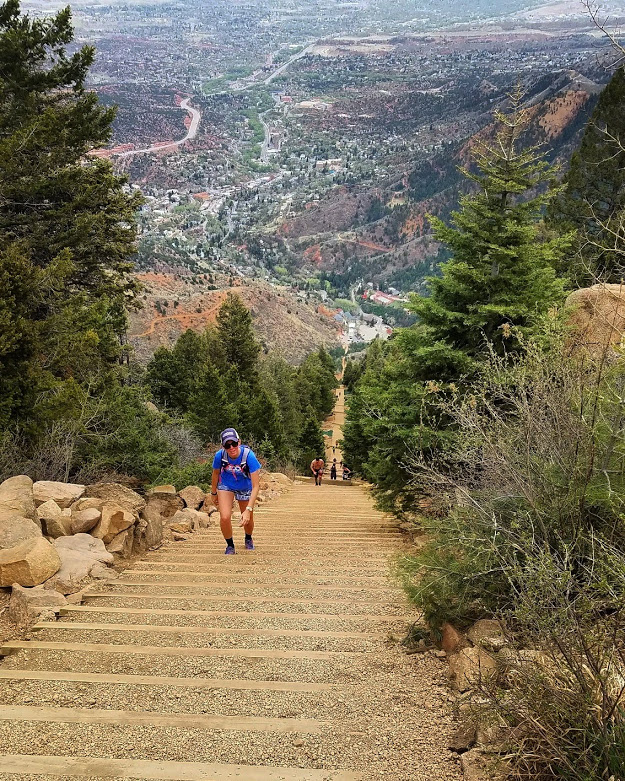
There are railroad ties that make the entire trail like nature’s Stairmaster, which actually makes it easier to climb up the whole thing. You don’t have to worry about sliding back down on the steep parts because it’s basically a staircase.
There are a few parts with wider steps of metal grating that help the trail drain properly. If you’re using hiking poles, be careful not to get them stuck in there. There are also plenty of points where you can pull over on the side if you need a break or to get out of the way for faster hikers. The trail is a consistent width all the way up that makes it easy for people to pass if you’re at a point that there isn’t a place to actually get off the trail. Just try to get as far over the right as possible when you do need to take a breather.
There’s a false summit that you can see right away. You’ll look at it and think there is absolutely no way that it isn’t the real summit. I didn’t believe people when they pointed it out to me. But please believe me, there is more to come after what looks like the top. Don’t be fooled – that was pretty emotionally crushing to me the first time I did it.
The start of the Incline. At the bottom of the picture, you can see one of the wider metal grates. The railroad ties continue all the way up the trail. At the top of the photo is the false summit – see how hard it is to believe that that isn’t the top?! But I promise, it’s not. This was on a weekday in May, which gives you an idea of crowds too.
Assuming you take the Barr Trail back down, which is the most beginner-friendly option, there are parts that get a little rocky and technical, but nothing too advanced. It’s downhill the entire way and controlling your speed can be difficult, so your quads will be a-burning by the time you’re done.
It took me 40 minutes to get up the Incline the second time I did it, including multiple breaks. I was able to run down the Barr Trail in about the same amount of time. For context, I was running pretty regularly at this point preparing for a four-mile section of the Colfax Marathon Relay – averaging two or more 2-3 mile runs per week. I only provide my time for your planning purposes – remember, this is all about challenging yourself and seeing what you can do personally. Plan on being out for two or more hours just to be safe.
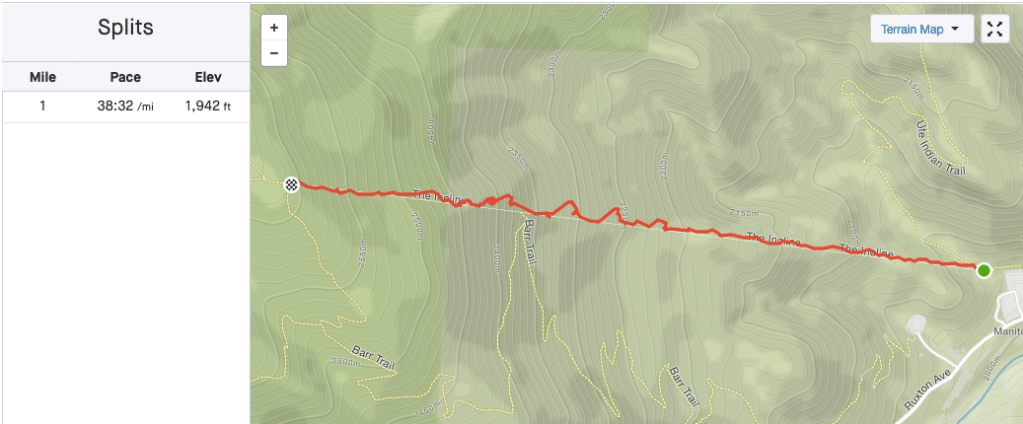
For some reason, I only recorded my hike up and not my run down, but you can see the Barr Trail zig-zagging its way back to the parking lot at the bottom of the screenshot. The way up is just as advertised – a mile straight up!
There’s very little shade on any part of the trail, which means it’s a great option for winter (assuming it’s dry) or spring. If you go in the summer, start early to beat the heat!
What should I wear and bring?
Because there is no shade, make sure to slather on plenty of sunblock and wear a hat and sunglasses.
I’ve done the Incline on a warm, sunny day in December and a cloudy day in May, both of which were ideal weather. I wore shorts and a t-shirt both times, but could’ve used a long-sleeved layer for the way back down (particularly the time I hiked down). Because the hike up is so strenuous, I would recommend wearing your grippiest running shoes so you aren’t bogged down with the weight of hiking boots. For this reason, and because I planned on jogging down, I wore my trail running shoes.
Hiking poles will certainly make your life easier, particularly helping out your knees on the way down. But the trail is at no point technical enough that you would absolutely NEED them. In the winter, if it’s icy, you might want some extra traction like microspikes.
I regretted not bringing water with me the first time I did the Incline. The second time, I wore my running vest and brought water and snacks (just in case, I always have snacks just in case) as well as chapstick with SPF in it and a long-sleeve shirt. I did my best to pack light since I certainly didn’t want to make going up the Incline any harder than necessary by having a heavy backpack!
Is it crowded?
Yes. Even on the weekdays, there has always been a crowd when I’ve done the Incline! On the weekdays, it’s totally manageable. I was in no way alone either time I’ve done the trail, but people were at least pretty spread out.
I imagine the weekends would be much more challenging, mostly because the road the Incline is on wasn’t built to handle the huge crowds it attracts. I’ve been lucky to do the Incline as part of my workday both times, so I haven’t had to contend with Saturday or Sunday crowds in the parking lot or on the trail.
Anything else I should know?
While I believe almost anyone can do the Incline if they take their time, I don’t think it’s a good idea for someone visiting from sea level unless you are already VERY fit. Colorado altitude can kick your butt on a regular hike, but adding on a hike that is a mile straight up probably isn’t the best idea.
However, if you’re already in Denver or elsewhere in Colorado, it’s less of an extreme. The hike is definitely very challenging, but like any hike, as long as you take your time, listen to your body, and give yourself enough time to complete it in good weather and during the daytime, it’s worth a try. Age and body type aren’t the best predictors of how physically fit someone is, but I’ve seen people of all ages, weights, and fitness levels (based on how out of breath they are when I see them) trying it out.
I’m also not a medical professional, so take on the Incline at your own risk :’
I can’t overstate just how enormous Yellowstone National Park is, which can make planning a trip a little intimidating. Things are so spread out that the park itself has full-service gas stations and grocery stores. There’s just SO much to see at this national icon. So how did we pick?
I read American Wolf a few months before our trip (which by the way if you haven’t read, do so immediately) and have always been a huge wildlife nerd, so visiting the Lamar Valley was high on my list.
Iconic geothermal features, like Grand Prismatic and Old Faithful, were our other must-do, along with seeing the Grand Canyon of Yellowstone. We optimized our four-day road trip (followed by three days at Grand Teton) to hit what we considered the most iconic areas of Yellowstone.
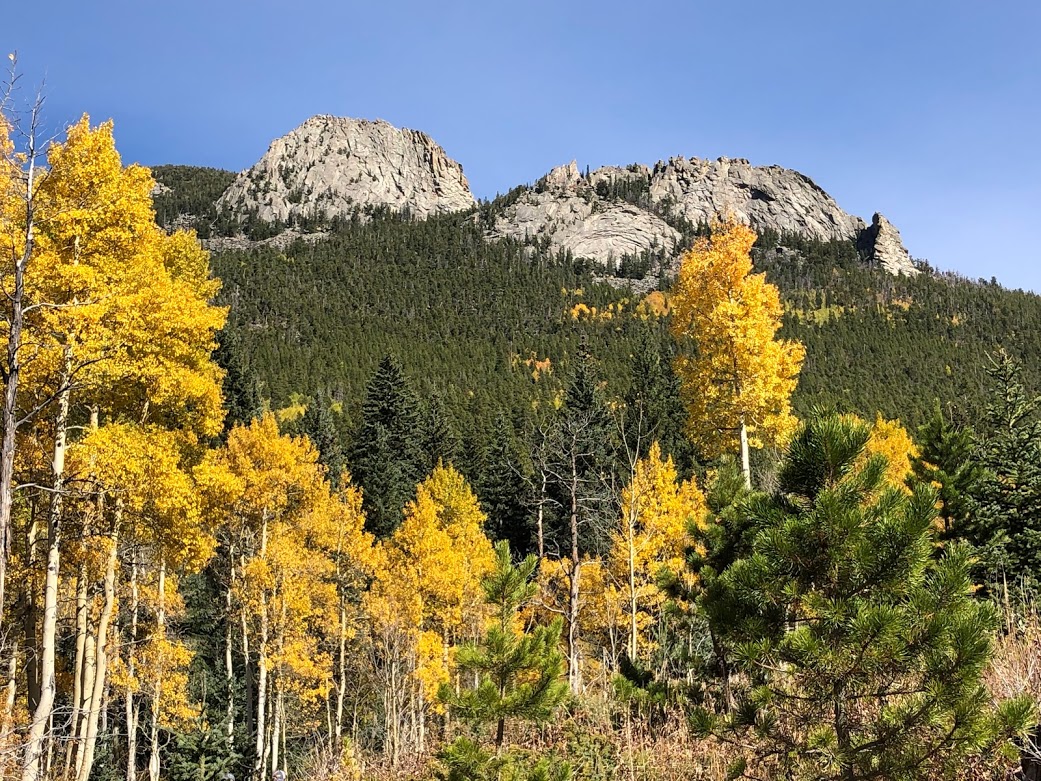
As an East Coast native, I wasn’t sure leaf peeping in Colorado could live up to the hype – after all, instead of an explosion of a billion different colors, you have “just” one color. Gold.
But there’s something about the contrast of the golden aspens against the evergreens that is just stunning. And there’s nothing like standing in a grove of dozens of bright gold aspen trees.
Torrey Pines is a must-do if you’re visiting San Diego. It has stunning cliff views and plenty of beginner-friendly hiking options. Plus, if you’re a nature nerd like me, the Torrey pine trees are a completely unique species and there was a lot of cool wildlife and other plants throughout our hike.
My husband and I visited in mid-September (because we are perpetually making our travel plans around when we can avoid crowds). We weren’t able to do the classic beach walk because of the timing of high tide, and also because I was six months pregnant and didn’t want to wake up early enough to beat high tide or walk that far. I did really want some cool views, I just really did not want to hike up the cliffs to see them.
We originally aimed for three short trails – North Fork to see the Broken Hill Overlook, the Red Butte loop, and Guy Fleming. We didn’t make it to Red Butte because I was running out of gas and didn’t want to miss the crazy cool views of Guy Fleming. All in all, we hiked just over 2.5 miles on some beautiful (and flat) trails!
How do I get there?
Drive north from San Diego. Make sure you type Torrey Pines State Reserve into Google Maps so you don’t accidentally navigate to the golf course. That will get you almost there, but obviously not quite to where you’re looking to go!
Taking the 5 is faster, but driving through La Jolla is way prettier. Plus you can stop at Bird Rock Coffee, which ended up being one of our favorite finds during our trip. If you’ve never been to La Jolla, add a stop at La Jolla Cove to see the sea lions and take the scenic route back to stop at Mt. Soledad.
Ok back to Torrey Pines. Once you get there, there’s free parking at the beach and a paid parking lot for the reserve. Don’t be fooled, this is not the only parking lot and you don’t have to walk up the giant hill along the road. Pay to enter the reserve (they take credit cards as of Fall 2019), drive up to the visitors center, and park there. This takes you to the top of the cliffs and gives you easy access to a bunch of different trails.
The drive is easy. The road is paved the entire way, but does get a little steep and curvy – just drive slowly and keep an eye out for pedestrians and cyclists.
Where do I go?
There is only one road, so it’s pretty much impossible to get lost!
If you want to do multiple trails, park at the Visitors Center (and take a quick peek inside if you feel like it or want a free map). There’s a parking lot directly at the visitors center and one across the road – the one across the road is a few steps closer to the trails and bathrooms.
We hiked multiple trails – Broken Hill Overlook via North Fork Trail (~1.5 miles round trip), poking around very briefly at Red Butte (~10 minutes of waddling), and Guy Fleming trail – and walked a combined 2.63 miles on all three trails. If you’re interested in more, add on on the entire Red Butte overlook after North Fork. The trail starts at the parking lot across from the visitors center.
If you only want to do one trail, do Guy Fleming. It’s got insane beach views from the top of the cliffs, cool wildlife, interesting plants, and of course, the iconic Torrey pine trees. Instead of going to the visitors center, park at the Guy Fleming trailhead (2/3 mile total). The parking area will be before you get to the visitors center on your right. There’s a dirt shoulder off the main road where you can find parking.
This is why the Guy Fleming Trail is a can’t miss! Guy Fleming is the white guy who was a big preservation advocate for Torrey Pines, but he seemed not awful based on the information plaques along the trail.
If you’re doing multiple trails, start with North Fork. A significant part of the trail is walking along a paved path/tiny road that gets hot very quickly. We started at 10 am in September and were very glad to be done (aka very very sweaty) by the time we were hiking back.
The North Fork trail is an “out and back,” meaning you hike out to the overlook and then hike back on the same trail. There are a few trail junctions, so make sure to follow the signs for North Fork so you don’t end up hiking all the way down to the beach, or missing the overlook by hitting South Fork. The trail was easily marked, so you will be fine!
After getting your Broken Hill photo op, hike back to the car and decide whether to add on Red Butte or go straight to Guy Fleming. It’ll likely be getting hot at this point, and Guy Fleming is also mostly in the sun (basically the entire park is mostly in the sun), so keep that in mind. This is also your chance for a pit stop at the port-o-potties (as of Fall 2019 the bathrooms were under construction). Make sure you bring hand sanitizer!
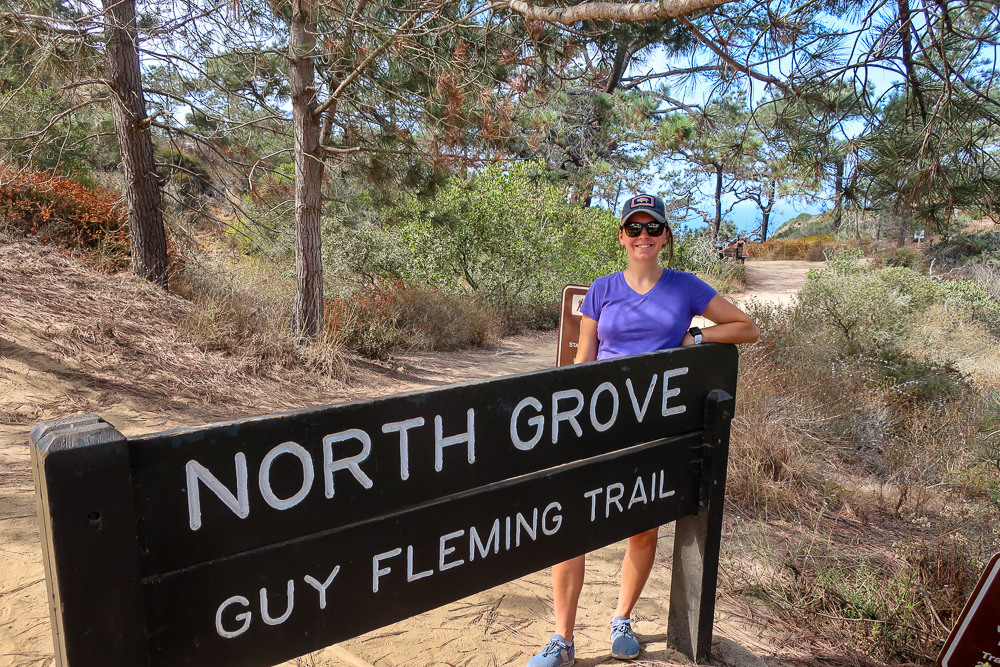
The Guy Fleming trailhead – you can see this sign from the road just beyond the parking area.
Whether you poke around Red Butte or not, drive over to the Guy Fleming trailhead to wrap up your day. It’s on your way out and there’s only one road, so it’s not hard to find! Guy Fleming is a “lollipop” trail, meaning you walk a short ways to a loop (so the trail looks like a lollipop on map). Because it’s a loop, it doesn’t matter which way you go. We went counter-clockwise to end up in the shade on the end of our hike.
What is the trail like?
The North Fork trail is mostly flat with scrubby brush until you get to the overlook. You can see the famous Torrey Pines golf course, but other than that the hike out isn’t particularly notable. The combination of desert plants and ocean is interesting, but the real reward is the view at the Broken Hill Overlook, which my photo honestly doesn’t do justice to.
Broken Hill Overlook
The Guy Fleming trail is slightly hillier, but more scenic for the entire time with two crazy cool overlooks. You also get to actually see the Torrey Pine trees on the north half of the loop, which can only be found in the park and on a few coastal islands. Plus, more pine trees means more shade!
The beginning of the Guy Fleming loop if you go counter-clockwise (so the south end). It gets a little hillier than this between the two overlooks, but there are benches to take breaks on.
Keep a close eye out for the little lizards that live in the park! We saw them on both trails. Walking along the cliff overlook on Guy Fleming was also a great opportunity to watch the peregrine falcons swooping around. The trail also had a bunch of different cacti, including really huge prickly pear.
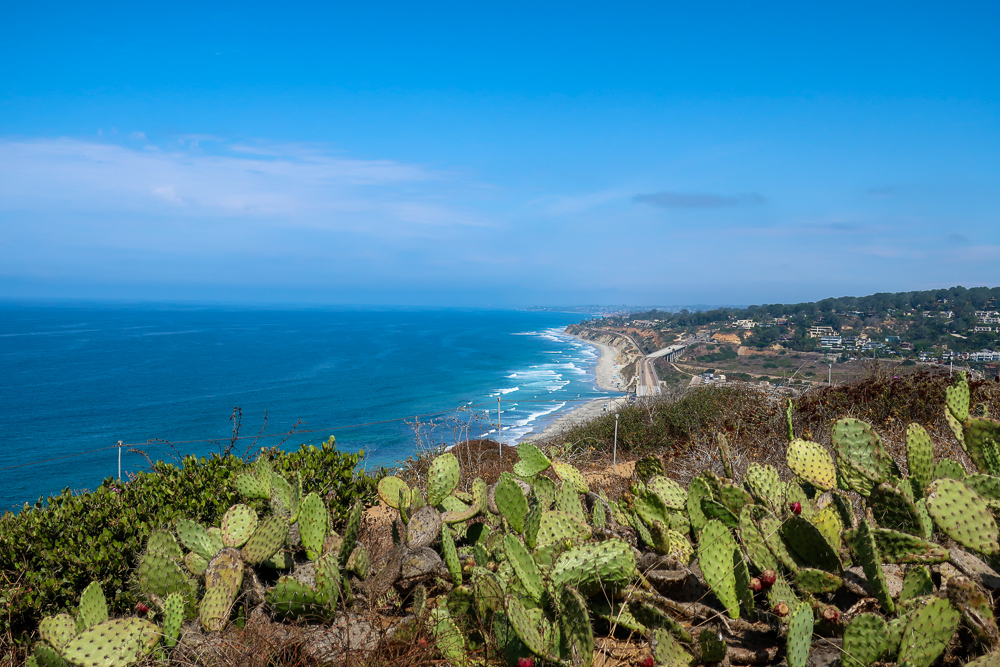
These views were not bad. Looking north from the overlook on Guy Fleming – you can see the beach area where you came in to the park.
All of the trails were well-marked and easy to follow. I still recommend bringing a map just in case! The map makes everything look really far apart, but once you’re up at the top of the road, it’s actually all very close together.
What should I wear and bring?
We hiked Torrey Pines in September, on a sunny day with highs in the 80s. It got hot quickly, so dress for warm weather, bring lots of water, and slather on that sunscreen! I also recommend a hat or sunglasses or both – see my entire list of what to wear hiking here.
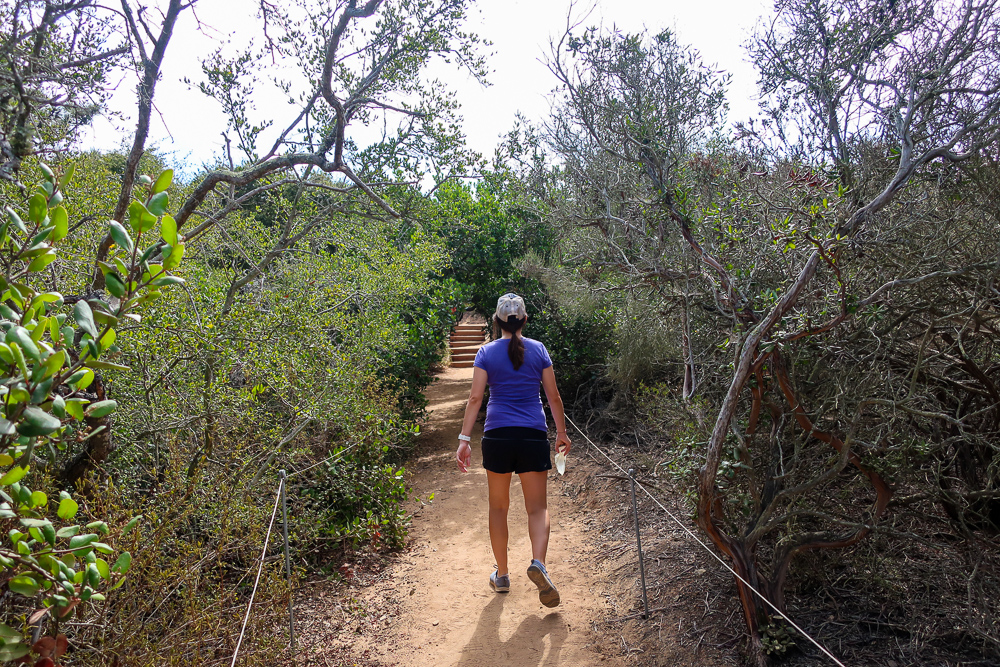
Denser vegetation on the North Fork trail, but still baking in that sun! I was glad to have a bottle of water with me while hiking.
I wore regular sneakers, not even grippy trail runners, and was totally fine. Parts of the trail are a little sandy, but overall there is nothing that you would need all-terrain shoes for.
You’re never too far from the car, so you don’t need to bring a backpack for the trails in this post. I was six months pregnant and eating every five seconds, so I packed plenty of snacks but just left them in the car. We had lunch back in Pacific Beach (where we were staying), but you could also pack a lunch to enjoy on the beach when you’re done hiking!
Is it crowded?
On the weekends, yes. In the summer, even more so. We went in September on a weekday and it was still very busy. This is not the place to go for solitude, but it is totally worth all the company for the views!
Do you have other Torrey Pines tips? Add them below in the comments!
Even if you aren’t new to running, there can be a steep learning curve to pace or crew an ultramarathon. The Leadville Trail 100 is one of the most iconic ultramarathons in the sport, and I’ve been lucky enough to pace or crew it for five different years, most recently in 2022.
This guide to crewing and pacing Leadville will cover just about everything you need to know, but if you want more personalized advice, you can also book a call with me!
What does it mean to crew?
First, let’s all get on the same page. If your friend has asked you to be part of their crew for an ultra, but you have no idea what that means, no problem!
Your runner wants to spend as little time at the aid station as possible so they can get back on the course and finish the dang thing. The crew arrives at each aid station well ahead of their runner with a bin of supplies and/or their drop bag of supplies for that aid station.
Note: The aid stations at Outward Bound and Twin Lakes let the crew pick up a runner’s drop bag, which is very handy! In 2022, the race still required the runner to pick up their own drop bag, even at Mayqueen in-bound.
Once you get to the aid station, you set up shop and wait for your runner to arrive. Once they get in, you leap into action like a NASCAR pit crew and get them in and out as efficiently as possible.
Of course the ONE photo I took all day was of all the dudes helping our male runner. Ladies were represented too, I promise!
You make sure their pack is full of all the food and water they need, that they have appropriate clothing for the next leg (in Leadville, runners have a river crossing, 15,000+ feet of elevation change, and very chilly nights, so this is a must!).
The crew is critical because you need at least one person who is reasonably well-rested, not worried about running, and whose sole focus is “do we have everything we need?” This only gets more important as the race goes on and the runner’s cognitive abilities and general executive decision making get more and more compromised. You’re their back-up brain! Plus it’s a big morale boost for runners to see friends and loved ones throughout the race.
What does it mean to be a pacer?
For the last 40ish miles of Leadville, runners are allowed to have one person run with them. This is a pacer. You’re there to keep them moving at a steady pace (whether they have a time goal or simply need to finish within the time cut-off) and serve as a kind of on-the-go crew, particularly once nighttime arrives and fatigue sets in!
For Leadville, you’re also allowed to carry the runner’s pack for them. But mainly, you’re there make sure they’re eating, drinking, moving, and at least somewhat happy (as happy as you can be trudging through 100 miles). If you have cell service, you can also communicate to the crew what your runner might want at the next aid station.
Pacing is a delicate balance of knowing when to encourage someone, when to give them some tough love, and when to go easy on them. It can be difficult to pace someone you don’t know or if you aren’t familiar with long-distance running yourself, but trust your instincts and discuss what kind of feedback motivates your runner ahead of time.
Trying to stay warm before my leg of pacing! Behind me is the spread for three runners – it’s more organized than it looks!
Most sections of the race are at least ten miles, but it’s possible to be a beginner runner and help pace. There’s a four-mile section that is actually incredibly helpful for a runner to have company for because it’s in the middle of the night through a very boring cow field.
If you have a training goal of running a longer leg, get after it! Just remember that this is not at all about you. You run when your runner wants to run, you run at their pace, you walk when they need to walk – your runner comes first. You’re there to support them, not to worry about your own distance or time goals.
What do I need to know to crew Leadville?
Honestly, it’s not rocket science. You have to be organized and able to follow your runner’s directions. You also need to be flexible, be able to think on your feet, and have a good sense of humor.
You need to take care of yourself (more on that later) but also keep in mind that you’re doing this in service of someone else’s goal, not for yourself. It’s not the end of the world if things go wrong, and it’s not helpful to get mad at your runner or fellow crew members. You just need to problem solve!
Plans change, things go off the rails, runners forget to tell you things, but at the end of the day it’s a wonderful privilege to be worried about the logistics of an ultramarathon. If that’s the worst thing happening in your life, you’re doing pretty well.
What should I do before the race?
Familiarize yourself with the aid stations. The race is one long out and back, so the runners go through every aid station twice. As of 2022, crew and pacers can access the May Queen, Treeline (unofficial crew access between Outward Bound and Halfpipe, a lot of people just call it Halfpipe or the field at Halfpipe), and Twin Lakes.
Remember how I said you need to be organized and have a sense of humor? I forked up the directions to the Treeline (unofficial) aid station on our way back from Twin Lakes, and my friend and I ended up driving to Mount Elbert by accident.
Fortunately, we had over an hour of cushion, so we still arrived to the actual aid station with plenty of time and didn’t miss our runner. And the drive was really beautiful, to be honest.
But also to be honest, I had a brief panic attack when I realized my mistake. My friend just thought it was a funny and interesting side adventure. Fill your crew (and your life) with people like that!
Crews, pacers, runners, and the beautiful views at Twin Lakes.
Make a plan. It’s important to sit down with your runner ahead of the race (even if it’s just the night before) and familiarize yourself with what they’re packing in their drop bags or what they would like you to bring to every aid station. That way you’ve discussed everything when they are alert and well-rested (the opposite of what they will be in the middle of the night).
For example, my runner really wanted hot soup at a particular point so I was waiting for her at that aid station with a thermos in hand. And, because I forgot to ask where they were ahead of time, I was scrambling to find her caffeine pills when she specifically asked for them later on.
Know when they’re arriving (approximately). You also need to estimate when they’ll be arriving at each aid station so you can plan accordingly. You should be ready to see your runner at least 30 minutes before you think they’ll arrive, which means you are physically at the aid station with all of their stuff ready to grab and go.
Buffer time is most important for getting to Twin Lakes it’s a sh*t show to get to. In 2019, we had to park almost a mile away from the aid station at Twin Lakes. In 2021, we got to Twin Lakes at probably the busiest time (11 am) and ended up frantically walking/jogging two miles to try to meet our runner.
I love a good spreadsheet, so I put all of this information in a Google sheet, downloaded the app, and kept it handy throughout the weekend (remember to make your sheet available offline). You can see it here.
Cell service will be spotty. Download the race guide, maps, and directions to all of the aid stations ahead of time. You also won’t be able to communicate with your runner or track exactly where they are, however you can sign up for text alerts for when they go through each aid station. This helps you guess more accurately when they will show up, but the app (Athlinks) is honestly incredibly unreliable. It gave my friends a scare in 2021 when it texted that their runner DNF’d (did not finish) when in reality he was still running.
In the second half of the race, if they have a pacer and you have the pacer’s phone number, you may be able to call or text them to get an update on roughly how far out they are. But keep in mind that the pacer may not be able to regularly check their phone because they’re keeping the runner going!
How do I get to every aid station in Leadville?
Leadville is extremely popular, but also a very small town. Each year the race tries to enact more measures to control crowds and cars, so stay tuned for 2023 updates! As of 2022, here is how to access every aid station and what they’re like:
Note: The race has “in-bound” and “out-bound” labels because it is an out-and-back route. The runners go for 50 miles to Winfield, then turn around and go back through the exact same aid stations.
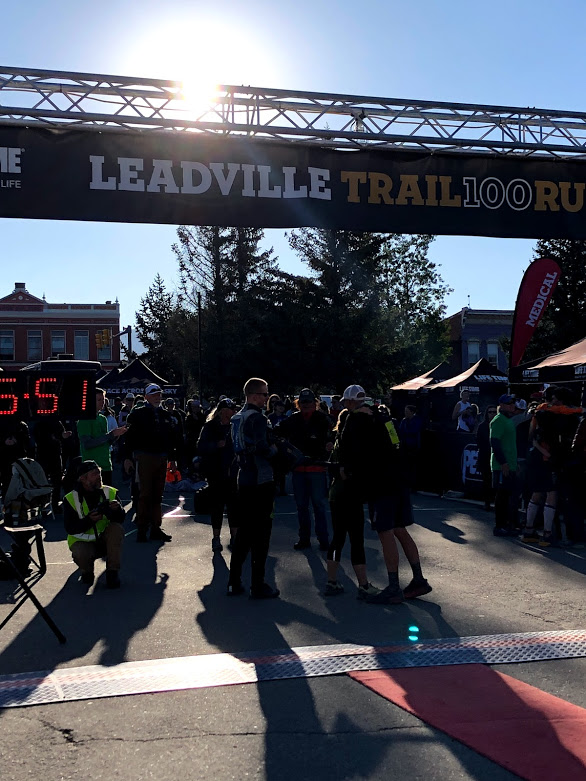
Start Line: You will have to walk/roll, but the main street of Leadville is shut down which makes it easier. If you have to drive from your lodging, expect to parallel park at least 3-5 blocks away on a residential street.
Mayqueen: As of 2022, you have to take a shuttle from town to the aid station. You can’t do very much for your runner at the outbound point, so I skip it to get extra sleep and avoid the hassle of the shuttle. By the middle of the night, when they are inbound, you don’t have to take a shuttle. You do have to park on the side of the road and walk/roll to the aid station. I walked about 10 minutes in 2022 and found parking pretty easily.
Outward Bound: This is the easiest aid station to get to. You park in a very large field, which does get dusty. There are parking attendants to direct you where to go. You don’t need a high-clearance vehicle, but go slower in a sedan since the ground is uneven. You will have to walk a quarter-mile or less.
Half Pipe: You have to hustle to get here in time from Outward Bound, even though they are pretty close together. Only four flat miles separate them, so unless your runner specifically asks to see you, head straight to Twin Lakes to try to get parking on the outbound. On the inbound, they will be moving slower so it’s less of a mad dash between the aid stations. To get here, you drive on an unpaved road that is bumpy before parking in a dirt and grass clearing. It’s bumpy but doesn’t require advance driving skills or high clearance.
Twin Lakes Outbound/Inbound: This is the hardest aid station to get to because of its popularity. You parallel park along a two-lane highway with a shoulder. You may have to walk up to two miles to get to the aid station itself. The small unpaved “street” through the “town” of Twin Lakes is where runners are going, and the street is lined with spectators and crew. It’s a blast! It will be considerably less crowded as your runner comes back from Winfield, since people get more spread out and drop out.
There are shuttles available for Twin Lakes, but they get stuck in the same traffic everyone else is in. There are tourists trying to get over Independence Pass, plus lots of crew/pacers, plus the shuttles. So you don’t have to worry about parking, but you sit in a ton of traffic so the arrival/departure times at Twin Lakes are less predictable.
What should I bring to every aid station?
Pack light and bring a few things for yourself. This might be difficult if your runner is channeling any anxiety into packing ALL THE THINGS, but try to pare down as much as you can.
Bring only the essentials for yourself: a camping chair, water, snacks, an extra layer, sunscreen, your wallet, and your phone. Always make sure to bring a camping chair (the Helinox Chair One has come in SO clutch here because it’s so lightweight, but it is expensive).
I keep more of my stuff in the car and repack what I need to bring in my backpack for each aid station. This includes hand sanitizer, bug spray, plenty of snacks, and extra sunscreen along with all of my layers for the weekend.
You’ll likely also have a bin or some other container of your runner’s stuff to carry. If you have a lot of stuff, a wagon can be helpful for Twin Lakes where you have to walk a long ways. The wagon is going to be a huge pain in the butt everywhere else.
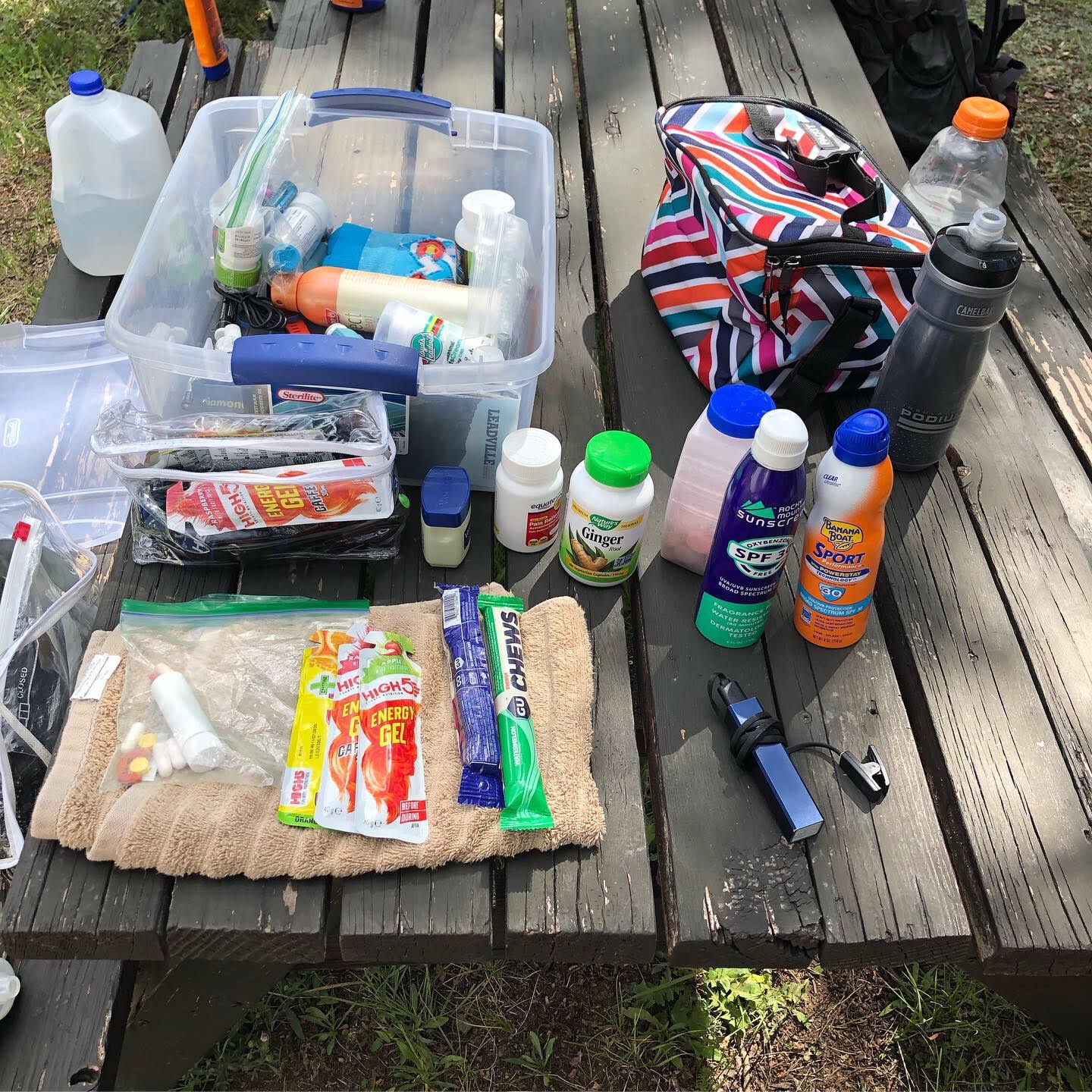
The bin! And everything that went in it, plus some back up supplies that I brought in my backpack.
Every aid station has port-o-potties that the crew can access, but you can’t access the water or other snacks at the aid station. Those are for pacers and runners only, so make sure you stay hydrated throughout the day (10,000 feet of elevation is no joke).
What should I wear?
The temperatures (and weather in general) can vary wildly. You’ll need plenty of warm layers for overnight, but in the daytime, it’s quite hot in the sun (and cold in the shade). It might also rain! Or hail! I bring a small duffel bag of a bunch of different layers, including:
Winter-weight leggings
Beanie
Gloves
Winter coat (doubles as a rain jacket)
Fleece jacket or pullover
Shorts
T-shirt
Light-weight long sleeve shirt
Baseball hat and sunglasses
My winter coat unzips into two layers, which helps me save space. I kept the outer shell with me all day as a windbreaker or raincoat, and swapped out other layers in my backpack as needed. Just make sure you have something warm and a raincoat!
I wear running shoes all day. It can be nice to change socks halfway through the day as a little pick-me-up, so I usually bring a few pairs. You’ll need warm clothes for the start and for once it gets dark. Make sure to bring your own headlamp and, if you have them, lanterns for your car for crewing in the dark. This lantern from Black Diamond is my favorite.
What’s it like to crew for Leadville?
You will walk a lot. Every runner has at least one car following them, meaning there are at least 800+ vehicles attempting to meet a runner throughout the day. As people drop out or get cut off, this obviously goes down. Cars also get more spread out throughout the evening as the runners get more spread out, but for the first half of the race, be ready to park far away (potentially 1-2 miles) from the aid station and walk there.
In 2019, I walked more than seven miles. I didn’t even go to all the aid stations, and I was actually trying to limit my walking for the day! (I was preggo and had pubis symphysis disorder).
You’re going to be very tired. It’s a very long weekend emotionally, so even if you’re not running, you’ll be headed to bed at 7 pm on Sunday. You need to make sure you get some sleep before then though. You can’t support your runner well if you’re also completely frazzled.
Trying to catch some z’s …what a view to sleep through!
You can split the day into two semi-reasonable shifts if you skip a few aid stations. You can either have multiple members of your crew to make sure all the aid stations are covered, or discuss with your runner which ones they would be okay with you skipping (particularly if they’ll have a pacer with them).
Most of all, it’s going to be an experience like nothing else. The trail running community is awesome. There is a sense of camaraderie that I haven’t experienced anywhere else, that maybe can only be forged when you’re running 100 miles through the woods (or helping someone do so). Leadville is a world-famous race, but the competition is far from cut throat and everyone is out there to help each other and have as much fun as they can. You’ll be tired, you’ll be inspired, you might cry at the finish line.
It’s a really cool experience that anyone can be a part of – so don’t hesitate to join in if you get the chance!
What does your typical weekend look like?
The race starts at 4am Saturday, and if all goes well your runner will finish sometime Sunday between midnight and 10am.
This was how I did it in 2019 with my husband and our friend (both pacers, but helped me out as crew when they weren’t running). For reference, that was our year three crewing/pacing and I thought we did the best job logistically this time! We followed a similar schedule in 2022, when all three of us split up pacing and crewing.
We stayed together all day except when one of them was pacing. You could cover more aid stations if you split up more than we did. Our runner prioritized nighttime pacing and morale boosts, so we prioritized those aid stations. As always, talk to your runner about their own preferences.
We woke up at 3:30 am to go to the start line with our runner. We went immediately back to the house and went back to sleep afterward, so we were back in bed by 4:30 am or so. We skipped May Queen because the crew can’t do much for you there when you’re not far into the race. It’s more of a morale boost. This is a point where you could split up if it was really important to your runner to see someone at every aid station.
Arrive at Outward Bound to really start the day (8:30 am for my runner). Be prepared to be out until after lunch time.
Next you have the option to meet your runner at Treeline (unofficial crew station along the road), or go straight to Twin Lakes. We went straight to Twin Lakes because we were worried about parking being a nightmare (it was). There’s a food truck at Twin Lakes and a general store if you need to buy anything. Both accept credit cards, but. thelines can get crazy so have a back-up plan!
In 2019, we skipped Winfield because of the shuttle fiasco and because our runner didn’t want a pacer until she came back through Twin Lakes. As of 2021, Winfield wasn’t an option for crew or pacers anymore.
~NICE BIG BREAK~
We went home, ate, slept, and got ready for the night shift. This was at approximately 12:30pm for us. We didn’t need to leave for Twin Lakes until 4:30pm.
Arrive back at Twin Lakes. We weren’t going home again until 11pm or later, so both pacers brought all of their running stuff with them. Your runner’s needs at every aid station vary, but at this point, your runner will be wet and it’ll be dark or getting dark, so a change of clothes and a fresh headlamp is a must for this aid station.
Meet runner and pacer at Treeline for a quick morale boost. This is usually your biggest break because Twin Lakes and Treeline are about 20 minutes apart driving but takes several hours to run. This is a great time to sleep in your car because you just park right next to the road your runner comes down. Our runner got into Treeline at 10pm.
Go directly to Outward Bound, switch pacers, and go home to sleep (this was around 11:30pm for us).
We left May Queen to the overnight pacer because we wanted to wake back up at 3:30am to see our other friend finish and we knew we wouldn’t be able to do both. But, we kept our phones on loud in case anything went awry. In 2022, we only cared about one person finishing so I went to pick up my husband who was done pacing and dropped off the person pacing the rest of the way.
Wake up and meet your runner at the finish line! We did this twice to see both friends. If you only have one runner finishing, you could add on May Queen overnight and not feel TOO horrific if you’ve gotten a nap earlier in the day/evening. It worked for me!
Have other Leadville questions? Book a 30-minute consultation with me for just $15.









 Outdoor Beginner