What it’s like to try rock climbing for the first time

Heights make me very nervous. I max out at around 6 push-ups. And yet, I decided to try out a sport that not only takes you very high up but also relies heavily on upper body strength.

That’s right, I went rock climbing.

Why?

Because I know my fear of heights is irrational. And, I like trying new things and getting out of my comfort zone (20-year-old me is saying “who even are you?”). So when my coworker organized a team-building afternoon “on the crag” (as the climbers say), I was in.

I watched everyone else go, including my fellow first-time-climbing coworker and a few others who hadn’t climbed in years. I was having a great time, feeling confident that I could do this…..and then it was actually time to go.

The fear sweats kicked in. I got that familiar stomach churning that starts whenever I’m scared or anxious. I suddenly found myself wishing I had gone to the bathroom before doing this. My heart started racing.

But I’m also very stubborn. And I said I would do this and I didn’t want to back out and be the only one that didn’t go (which, for the record, would have been totally fine because everyone was super supportive).

I’d already confided in my coworker and her husband (who were leading the trip) and tried to remember their words of wisdom as I put on my harness.

They made the obvious point that I didn’t need to go up all the way (and probably shouldn’t if I thought I was really going to freak out and not be able to come back down). They reminded me we were just out here to try something new, have fun, and spend time together. I could go two feet up, decide I wanted to come down, and that was totally cool.

Starting out was actually pretty easy. I was worried my arms were going to poop out on me, but it was easier than I thought to move around. About halfway up, the obvious places to put my hand and feet started to run out, and I started getting worried about falling.

I was in a harness and ropes, so even if I did slip and fall, it’s not like I would plummet to my death. But my lizard brain was sending things into overdrive.

I thought about coming down then, and I knew no one would judge me if I did. As I tried to decide if my rapid breathing was because of physical exertion or fear, I remembered Caroline Gleich’s video that I just watched from REI.

(If you haven’t watched it, do so immediately)

This badass woman skiing these INSANE lines in the backcountry of Utah…was still nervous sometimes. In her GoPro videos, you could hear her nervousness, her discomfort, her pep talks to herself.

So I reminded myself that I could do this. I wasn’t tired, I was just nervous. I was doing something new and scary, so it was okay to be nervous. But it didn’t mean I needed to quit.

I remembered that my coworkers had all done this already and decidedly did not die.I remembered I trusted my coworker belaying me. I remembered she wouldn’t put anything in front of me that she thought I couldn’t do, and the whole point of the day was to try something new and out of your comfort zone.

And then my stubborn streak kicked back in.

I got to the top of the route.

My coworkers cheered, I grinned from ear to ear…and then I realized I needed to get down. And the way you do that is by letting go of the rocks with your hands, sitting back like you’re in a chair, and walking yourself down backward. Basically, doing exactly what I didn’t want to do for (irrational) fear of falling to my death.

I had also had to look down at this point to ask my coworker what I was supposed to do next. So that wasn’t helping. My rapid breathing returned. I willed myself to let go and sit back, and I couldn’t. I reminded myself this was the only way back down. But my body was not responding. It was full lizard brain paralysis.

By some magical streak of luck, my coworker’s brother-in-law (an insane climber and professional guide) was at the exact same height as me, on another route just a few feet over.

Or, maybe me being frozen, frightened, clinging to the rock, and not moving resulted in someone yelling at him to go help me. I couldn’t hear anything over my raging, rapid heartbeat.  He pep talked me into leaning back, and letting go, and I slowly made my way back down.

That was honestly the scariest part. Going up, you don’t really realize how high up you are, and you feel like in control because you’re holding on to something in front of you. Coming down was legitimately terrifying, and by the time my feet hit the ground again adrenaline was coursing through my veins. I was shakey and teared up a little (shout out to sunglasses for hiding that), but also had an insane feeling of accomplishment and excitement.

After calming myself down, but before my brain decided it was OVER THIS, I did one more route. After getting the first time over with, I was actually able to enjoy rock climbing.

I realized why people get hooked on it. It’s really just one giant puzzle that each person figures out in their own way. None of us took the exact same route up, and it’s up to you figure out in the moment what’s going to work for you to get yourself further up. I loved that about it, and it was quickly addicting.

I was able to take a deep breath, and just look around. I was comfortable taking my time to figure out what my next move was, instead of panicking that I was stuck. Leaning back to get down was still nerve-wracking, and it helped the entire time that my coworker-belayer kept the rope really tight so I always could feel the harness holding me up.

When I was back on the ground, I felt like such a badass. I had conquered a major fear of mine. I was stronger than I thought I was (although my arm/shoulder/back muscles were basically useless the entire weekend after).

No matter what your fears are, no matter how self-conscious you are, if you’re able to let go of that and get out of your comfort zone, you’re never going to regret it. At least I haven’t.

I am so thankful to my coworkers for giving me that space to get comfortable being uncomfortable, for lending me their gear and expertise, and for taking me on one of the most exhilarating, empowering Friday afternoons of my life.

img_6884.jpg


What it’s like to volunteer on a trail building project (and why it’s important)

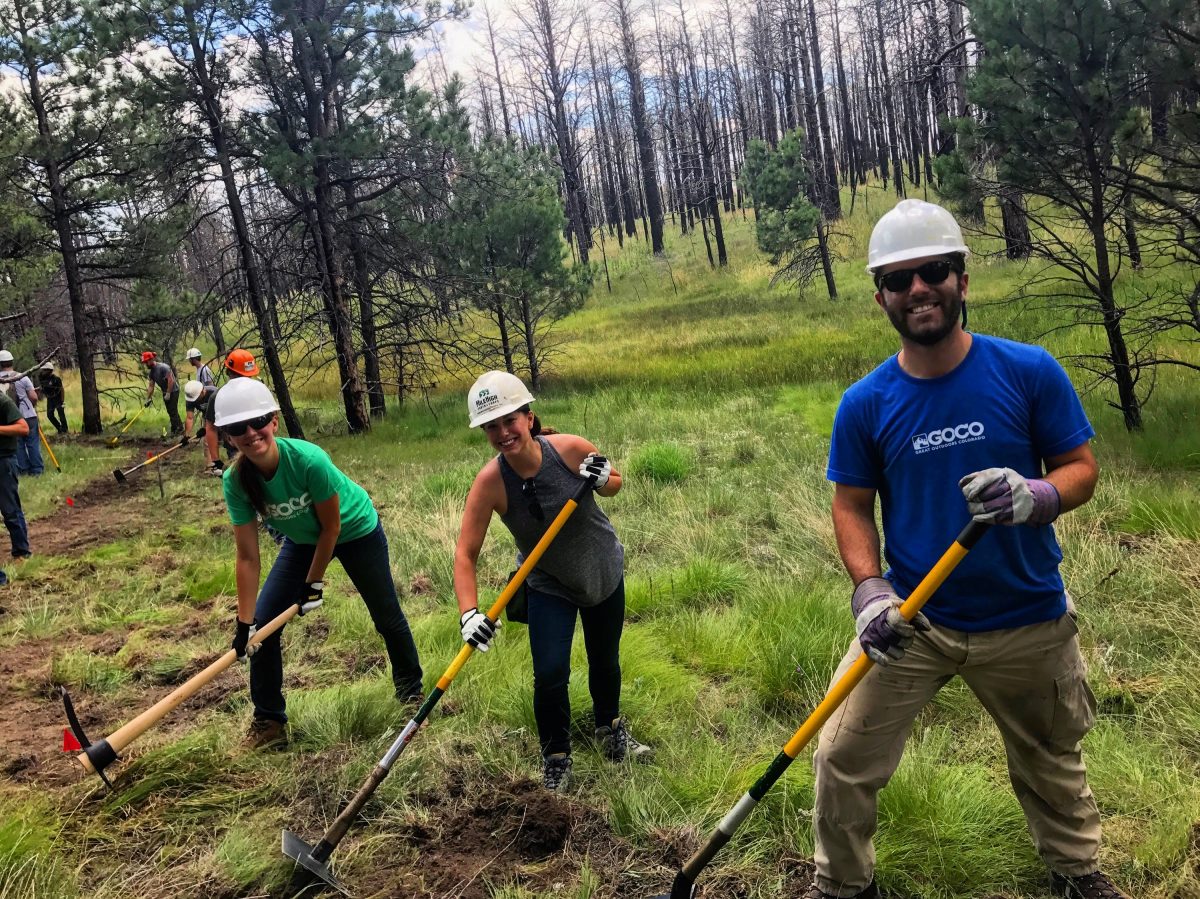
One summer, my previous day job took me on a trip to build some trail. Great Outdoors Colorado (GOCO) helps fund a ton of trail projects, but this was the first time many of us had gone out to actually build one ourselves. We were paired up with a crew from Mile High Youth Corps, and with 15 or so staff members out there I figured we would get at least a mile done, probably two or three. I mean how long could it possibly take, right?

Spoiler alert: a long effing time.

When I used to write press releases about these grants that employ Youth Corps, I sometimes found myself wondering, “500 feet of trail? Really? That’s it?” I knew the projects were needed, that Youth Corps is a path to financial independence and higher education, and that trail building was hard. But I’m a little embarrassed to say I didn’t really grasp it until I was out there myself, pick axe in hand.

We were building trail on what was described as an “easy” surface. Soft topsoil with a layer of grass on it, but not rocky and not too overgrown. The surface was also pretty much level, and we weren’t on the side of a mountain, just in the middle of a forest.

After half a day of intense manual labor, and what I thought had been pretty quick progress through the woods, we had managed to eke out less than half a mile of trail. Seriously!

Working at GOCO has opened my eyes to how much work it takes to build, let alone take care of, the amazing outdoor recreation amenities that so many of us enjoy – and quite frankly, expect to always be there.

I see more and more articles written that ask the question, particularly in Colorado, “are we loving the outdoors to death?” I’m not going to get into whether growth is good, bad, or somewhere in the middle. But it’s not debatable that Colorado is growing at a very fast rate. A vast majority of people moving here come here to play outside, which that increases the strain on our natural resources.

An article in 5280 interviewed Volunteers for Outdoor Colorado, an organization that, as the name suggests, mobilizes volunteer labor to take care of Colorado’s great outdoors. VOC mentioned that while they enlisted 100,000 volunteers this year, which is great, there are 3 million people that live in Colorado.

That’s a big gap.

(And I’m in that gap, considering I only “volunteered” on a work day with my office)

Taking care of the great outdoors that you enjoy doesn’t take bulging biceps, or really any skill to speak of. Participating in a trail building or trail maintenance project is something anyone can do (VOC even has trips for kids and families!), and something everyone should try.

Donating money to organizations like VOC and the Colorado Youth Corps Association is of course also great, but there is something transformative about actually doing the work yourself.

By lunchtime that day, muscles I did not know I had were hurting. But looking at that few hundred feet of trail winding through the trees filled me with pride, as I realized I’d helped build something that other people would one day enjoy. Maybe it would be their first hike that would spark their love of the outdoors.

Trails don’t magically appear. And they sure as heck don’t magically maintain themselves. Nearly all of our trails in Colorado are built, fixed, and maintained by hand. And many times that hard work is done by volunteers who use those trails themselves.

What doesn’t happen very often? That the other 97% of us stop and think about the impact we’re having and the responsibility we have to make sure everyone can have the same experience that we do.

I hope to see you out there building some trail with me next year.

How to pack for two weeks in Greece with one carry-on

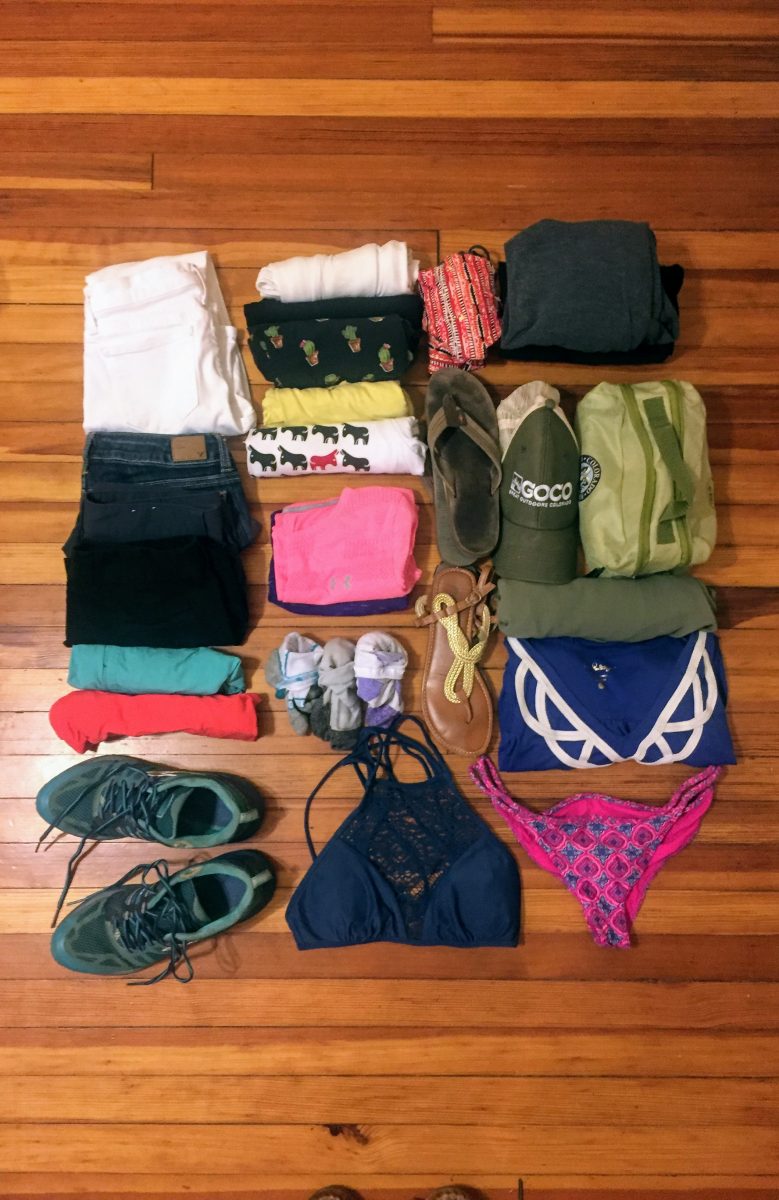
I’m back from my honeymoon in Greece, freshly married and no longer jet-lagged. There were obviously a lot of great things about this trip, but one of my proudest moments was managing to fit everything I needed for two weeks in one carry-on.

This post from Erin Outdoors and this list specifically for the Greek islands were both really helpful starting points for me to get packing, and now that I’m back I have some advice of my own.

Over the course of two weeks, we were in Athens and three Greek islands (Paros, Naxos, and Santorini). We did laundry three times, and I only ran out of underwear once! It was completely worth it to pay for laundry and only have one bag to lug around. Carrying on a bag is admittedly less convenient in the airport, but the time you save of not waiting for baggage claim and checking in is insane and worth it.

Download the printable version of this list here >>

But first, what did I actually put all of this in?

Suitcase vs Backpack vs Duffle Bag

I used a standard size carry-on suitcase and my backpack that I commute to work with. The only time having a suitcase was a pain was in Santorini, since there are a lot of stairs. Still, since I only had one bag it was not the end of the world, just a good cardio workout. Also, I didn’t want to buy any new luggage so this was the most cost-effective route for me.

Quick side note. Make sure to put something on your suitcase so that it is easily identifiable as yours – all suitcases look the same (yes even the red ones you think would be unique, this happened to my mom), and having a sticker or ribbon or something on it can make it easy to spot if you do have to check it or when you stow it on the ferry between islands.

We made friends in Santorini with a couple that was doing it with only backpacks – so one massive one on your back and a smaller one that you put on your front like one of those baby carriers. It worked really well for them, and it’s convenient to not have to navigate something on the ground, but is obviously more physically taxing to carry everything on your back.

If you want the best of both worlds, Cotopaxi has a travel backpack that I have been drooling over forever.

OKAY. Back to what you’re actually going to put in this thing.

Clothing: What I Brought vs What I Used

Everything you bring should be interchangeable – ie, all the shirts should go with all the pants you bring and vice versa. This kept my wardrobe super versatile and made me realize I could have brought a little less than I did.

Shirts

  • 2 athletic-fabric shirts: we did a fair amount of hiking, and it was super hot even in September, so I was glad to have both.
  • 3 casual shirts: these were great for travel days or when I wanted to look a little nicer, but I could have done with just one.
  • 2 fancy shirts: even at the nicest restaurants we went to on the islands, I could have gotten away with a more casual outfit, but it was fun to be able to dress up a little.
  • 1 versatile sweater: a must-have. Nights get breezy and a little chilly, it’s very windy on the ferry between islands, and you’ll want something for the plane.

Bottoms, etc.

  • 1 pair of jeans: also a must for the evenings. I opted for white skinny jeans, because Greek islands and summer.
  • 3 pairs of athletic shorts: my hiking shorts were SO nice to have since they look like regular shorts but have lots of stretch that makes them ultra comfy. I also brought two pairs of Patagonia Barely Baggies, but definitely only needed one.
  • 1 pair of jean shorts: handy to switch off with my hiking shorts for when I wanted to be more put together than athletic gear.
  • 1 pair of nice shorts: these were a nice-to-have not a must-have, but a pair of black shorts helped me look a little more polished at dinner.
  • 1 pair of yoga pants: I’m always freezing on the plane, so this was a must-pack for me. I only used them on the plane, and they were a little bulky, so in the future, I’ll try to bring something that compresses better.
  • 3 dresses: definitely too much. I could have easily done two, or one if I didn’t want to cut down on shirts.

Shoes

Do not bring heels. You will roll your ankle on the uneven streets and alleys of the Greek islands. Plus, no one is really that dressed up except for the rich people on Santorini, and all of them are clutching desperately to their spouse while they try not to roll an ankle.

  • 1 pair of flip flops: for the beach and shorter excursions.
  • 1 pair of trail running shoesgreat for exploring, hiking, and airport comfort. Billy brought regular sneakers and was fine – my trail runners are just my most comfortable shoes.
  • 1 pair of nice sandals: totally optional, since my flip flops would have been fine at all the restaurants we went to. If you do bring sandals, make sure they have a thicker sole – mine got uncomfortable quickly on the irregular streets of the Greek islands.
  • 1 pair of boat shoes: totally unnecessary.

Undergarments

  • 3 sports bras: could have easily gotten away with two.
  • 2 regular bras: I needed a strapless bra for a few of my shirts and dresses, but could have done with just one regular bra otherwise.
  • 2 swimsuits: could have managed with just one, but it was nice to have multiple and they don’t take up much room.
  • 5 pairs of underwear: I knew I wasn’t going more than four days without doing laundry, so obviously pack according to your laundry schedule. You can always wash them in the shower if you run out.
  • 5 pairs of socks: way too much, I only needed three even with all the walking around and sneaker-wearing I did.

Oh, also bring something to sleep in. I forgot to do that.

Toiletries

These travel size toiletry bottles were perfect – I love the bright colors and the multi-pack was cheaper than anything I saw at Target or the grocery store. You can also buy toiletries in travel size if you prefer, but it’s more cost effective to get the bottles and fill them from your normal toiletries.

Disclaimer: I struggle to pare down my toiletries because my skin is a nightmare (spoiler alert, acne doesn’t end in high school!) so I have a million lotions/face wipes/special face scrubby brush/etc. And yes, I drink lots of water etc etc please just leave me be in my struggle.

  • Shampoo + conditioner
  • Face wash: and my uppity ass face brush, and acne wipes, and non-acne wipes.
  • Moisturizer + face sunscreen: some brands make my face breakout so I brought the one I normally use. We bought sunscreen at the first island we got to and it lasted us all two weeks, so don’t worry about packing sunscreen if you don’t have skin issues.
  • Body wash: you could use shampoo as body wash if you really want to cut down.
  • Nail clippers and nail file: just make sure it’s not over six centimeters or you’ll have to sacrifice it to Greek security.
  • Q-tips
  • Deodorant
  • Makeup
  • Tweezers
  • Brush: I actually brought a styling brush and products, and then never used them. The islands are casual and it was always hot and/or windy, so I never really wanted to wear my hair down.

Everything Else

  • Laptop + charger: I only brought this for entertainment on the plane, but we flew Delta which has free movies and TV, so I ended up not using it at all.
  • Phone + charger
  • European adapters: These were actually pretty easy to find once we got to Greece, but it would have been easier to just have them with us and not have to waste time hunting for them.
  • Jewelry: I brought three pairs of earrings (one pair of studs that went with everything, two fun dressy pairs) and a statement necklace, all of which went with any outfit I packed. I put everything in an old KT Tape container since I have 900 of those but can’t recycle them, so I just feel guilty and collect them.
  • Kindle + charger
  • Guide books: we had already gone through these before we left and made a list of places to go, so it ended up being totally unnecessary to pack them.
  • Medications + first aid kit: we actually forgot a first aid kit, and then I got a splinter and we realized we were idiots. Just a little antibiotic ointment, alcohol wipes, and ibuprofen goes a long way!
  • Headphones: for in-flight entertainment, listening to podcasts, and any audio tours (Rick Steves has great free ones!) you may do.
  • Eye cover + ear plugs: a surprising amount of people open the plane windows during the part of the flight where everyone is trying to sleep, plus there’s a bunch of noise and light from whatever other people are doing to try to get through a trans-Altantic flight.
  • Water bottle: I brought mine, but Greece didn’t have tap water that was drinkable, so I ended up barely using it. It was nice for the flights though – there were plenty of water fountains in JFK to fill up at, and Denver has those great water bottle stations.
  • “Turkish” towel: I use quotes here because I got this lightweight beach towel for $6 at Sunsations in Ocean City, Maryland and it was most certainly not made anywhere near Turkey. I had no idea they were an actual thing, but just needed a beach towel that would fit easily in a suitcase. This was a great plane blanket, beach towel, and swimsuit cover-up.
  • Sunglasses + hat: I brought a regular baseball hat to save space, and while I looked a bit more HI I AM AN AMERICAN than people in straw hats, I didn’t mind.

How did I get all of this stuff into my carryon? PACKING CUBES. They help you fit more things in your bag, keep you organized, and are a general godsend. Roll everything up and put it in cubes and you’ll be good to go!

Did I forget anything? Tell me what I missed, or what you’ve found helpful, in the comments section!

Is there space for beginner runners in Leadville?

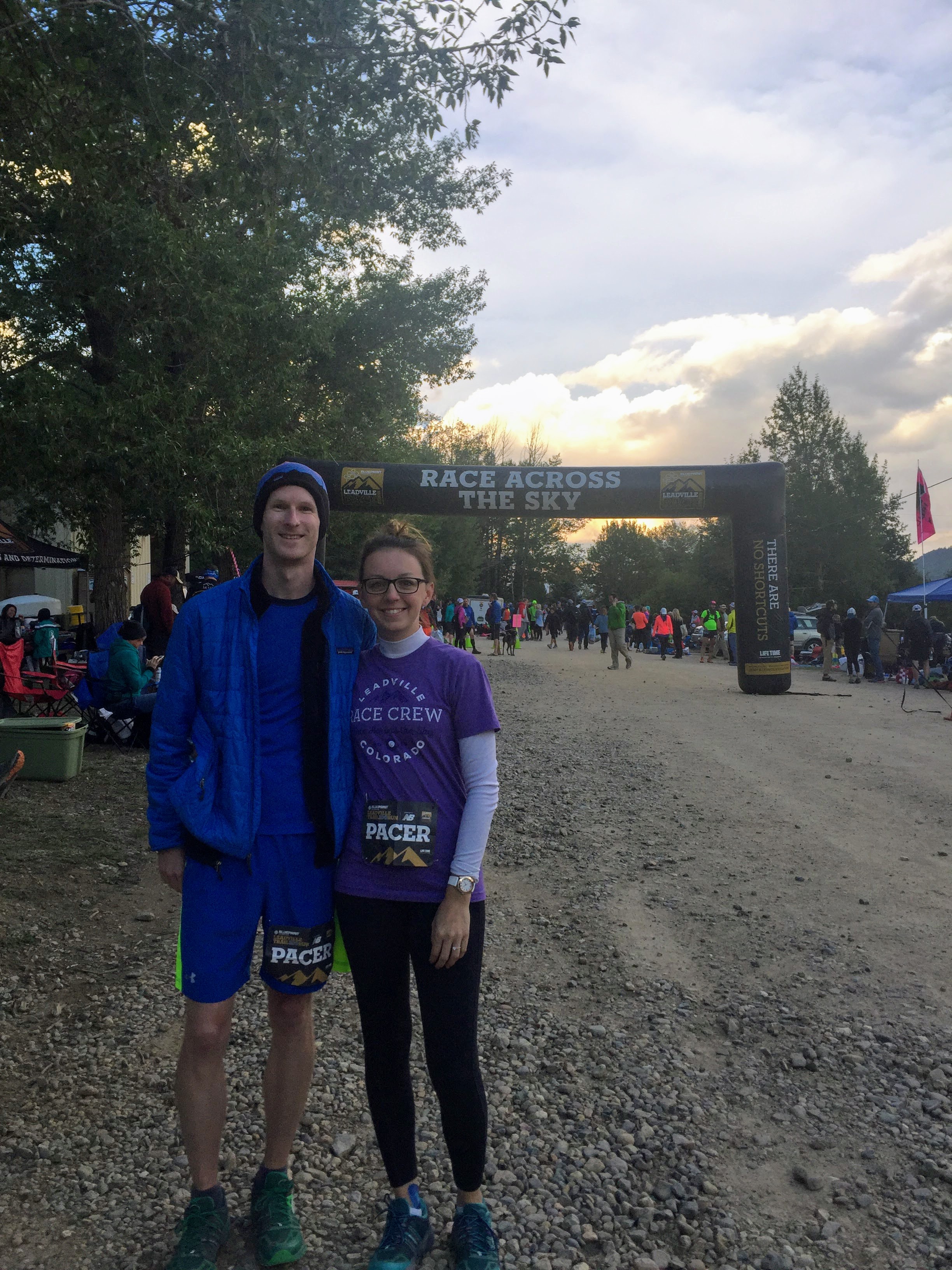
Like many other runners, I heard about Leadville from the classic running book Born to Run, with its tales of elite athletes and insane conditions and 100-mile races in the mountains. So when we showed up in town to pace a new friend at the Leadville Trail 100 in 2016, I was nervous (to say the least).

Back in the safety of Denver, it had seemed like a great idea, a fun adventure! But as we parked our car at Twin Lakes (one of the aid stations), everyone else seemed to know what they were doing, be an expert runner, and just seemed very cool.

I was worried I’d made a mistake, that I didn’t deserve to be there, that as someone who could barely run a 5k with a nagging ankle injury I shouldn’t have even come. I had willingly plopped my beginner self into the world of elite trail running. And surely I did not belong.

I was dead wrong.

IMG_2461

People welcomed us with open arms.

The atmosphere in Leadville the weekend of the 100-mile run is honestly like nothing else I’ve experienced. Considering it’s such a difficult race (understatement of the century), everyone is having an absolute blast.

The volunteers are smiling, fellow runners are cheering you on if they pass you, and people are cheering on runners at every turn while enjoying some time outside in a beautiful place. Yes, even at mile 75. In the dark. When it’s getting cold. And you’re on the boring section of the race that’s just on a road.

Leadville is where I got bit by the trail running bug. It’s where I walked four miles through some cow fields and down a lonely paved road with a new friend to get her through the night (because she was not having a blast at that point).

It’s where I willingly stayed up until 5 a.m., got an hour or two of sleep, and jumped out of bed to run with Katy across the finish line for a personal record finish time. It’s where I met some of the coolest, genuinely nice people I have ever come across.

Leadville is where I fell in love with running.

I came back to Leadville in 2017 the week before the big 100-miler. Katy was running again, but we had a wedding to go to, so we came up a week early to see her and our other friends while they were in Colorado. And to run a 10k.

The Leadville 10k is a warm-up run for many who run the Leadville 100, but it was my Everest. As everyone was getting ready for the race on Sunday morning, I found myself retreating to the backyard to try to get a hold of myself.

As I sat stretching with my legs up the side of the house, I wasn’t sure I could do this. I had suffered from altitude sickness basically every time I had gone to the mountains this summer, which was all at much lower elevation than the 10,000-foot mountain town I was about to run in. I wasn’t sure I could even run 6.2 miles on such a hilly course.

By the time we were down to the start line, I was practically giving myself an ulcer from worrying so much. Everyone seemed like they were about to take a walk in the park, while I was worried if I would even finish. Would I look like an idiot with my pack of snacks and water? Would people judge me for how slow I was going?

But then I saw a man in head-to-toe lime green spandex, complete with furry leg warmers. He matched his wife, who was in all hot pink. There was another guy in a banana costume. There were a bunch of other ladies with packs on, all lined up at the back of the finish line with me in the slow group.

That same electric energy I experienced at the 100-miler came back. I looked around and everyone was just pumped to go for a run. Running is FUN, remember?!

By the time I was trudging up the homestretch (literally, it’s up a giant hill to the finish line, it’s awful), I was out of breath, very tired, and just hurting. I turned to Billy and for the first time said, ” I don’t know if I can do this.”

But then I saw my ultra-marathon running friends. Because they had finished 45 minutes ahead of me, but also because they were purposely waiting at the finish line for us to cheer me on to the end.

They knew that while this was a walk in the park for them, it was a huge deal for me, and were screaming and cheering and urging me on to the finish. A group of little kids ran out to give me high fives as I “ran” by them, and it hit me that every single person was out here for the simple love of running.

IMG_6177
LOL @ the differences between leg muscle sizes. Guess which one I am?!

It didn’t matter that I was slow. That running 6.2 miles was REALLY hard for me. That my goal was literally just to finish and hopefully not get altitude sickness while I was at it. I was part of this amazing community that just. loved. running.

I never thought I would belong in the running world, or that I would ever be actually enjoying running. The spirit Leadville embodies is what is amazing about this sport, and how inclusive it can be, despite how it appears from the outside looking in. You better believe I’ll be back next year for more.

….And that’s where I was going to end this blog. But then I remembered I’m white, skinny, and look like a “typical” runner. No matter how much of a beginner I am, I still enjoy some privilege when it comes to blending into these spaces. While the crowd at Leadville wasn’t all white, it was certainly a majority white space.

So obviously I can’t speak to what it might be like entering this space as a person of color, or a person of color who is also a beginner. Or even a white person that’s doesn’t fit the stereotype of what a runner is “supposed” to look like.

That’s why I want to hear from you about your experience in Leadville. Did I completely miss the mark on this blog? Did I only find Leadville’s elite running world welcoming because I look like the people on the podium? Tell me in the comments.

IMG_6165


Beginner’s Guide to Floating: What to wear (and expect) your first time tubing

Let me preface this by saying I went floating down a river in Colorado in August, when water levels are low and temperatures are semi-tolerable. Your experience may vary (I hope you can find a warmer river than I did) but the clothes and gear you need won’t.

Do I need to get a legit river tube?

For the love of god, yes. I tried a crappy tube from Amazon and it turned out to be exactly that. You need a tube with: thick plastic material so it doesn’t pop; handles so you don’t lose it; and enough size to sit up on the water instead of in it.

The Intex River Run tube I ended up using is a really common one that works great. The headrest, handles, and cupholders all came in handy and the netting on the bottom made for a comfortable ride. The only things that are absolutely necessary are the handles; the other features are nice, but optional.

amzn_assoc_tracking_id = “outdobegin06-20”; amzn_assoc_ad_mode = “manual”; amzn_assoc_ad_type = “smart”; amzn_assoc_marketplace = “amazon”; amzn_assoc_region = “US”; amzn_assoc_design = “enhanced_links”; amzn_assoc_asins = “B000PEOMC8”; amzn_assoc_placement = “adunit”; amzn_assoc_linkid = “ea78fca6709f86bc23d9f157a16ea6d0”; //z-na.amazon-adsystem.com/widgets/onejs?MarketPlace=US

You can also rent tubes, and those companies will sometimes also pick you up and drop you off which is SO nice.

How do I blow up the tube?

Having a battery-operated pump saves you lots of time and energy. This one came with my camping air mattress, but also worked really well for blowing up tubes. Even better, the newer model is rechargeable!

amzn_assoc_tracking_id = “outdobegin06-20”; amzn_assoc_ad_mode = “manual”; amzn_assoc_ad_type = “smart”; amzn_assoc_marketplace = “amazon”; amzn_assoc_region = “US”; amzn_assoc_design = “enhanced_links”; amzn_assoc_asins = “B07QBMQSMS”; amzn_assoc_placement = “adunit”; amzn_assoc_linkid = “d80f6cc52c88ede10287612aeaa93520”; //z-na.amazon-adsystem.com/widgets/onejs?MarketPlace=US

What kind of shoes do I need?

Crappy flip-flops you don’t care about. Not caring about them is important because you will likely lose them.

If you want to buy something, I recommend water shoes. I like the newer water shoes that look like sneakers because I get extra foot protection and don’t worry about my shoes coming off. This is especially helpful for when (not if) you get stuck in shallow parts of the river and need to get up and walk yourself back on course.

The water shoes I originally bought are no longer available on Amazon, but these or these look like great alternatives. I like the sneaker-like ones because they have more substantial soles and the laces make sure they don’t come off your feet. They also dry super fast because of the mesh sides and all the holes in the sole’s design. Plus I like the way they look!

What clothes should I wear tubing?

A swimsuit and shorts worked great for me. You definitely don’t need shorts, I just felt more comfortable that way. I also happened to have shorts that are basically swim trunk material so they dried quickly. If you want to cover up more, I would highly recommend swimsuit-material clothes with UPF protection.

Even if you do wear quick-drying clothes, definitely bring a change of wardrobe to switch into once you’re done. After being on the river for an hour, I was VERY ready to not have a wet booty.

What else should I wear?

Sun protection! If you’re in the market for a shirt with UPF, I highly recommend Free Fly’s shirts. Wear a hat, sunglasses, and sunscreen that’s safe. Sunglasses also keep you from squinting your way down the river – the glare of the water is no joke! Croakies or some other sort of sunglasses retainer are a good security blanket if you’re worried about losing your sunnies, but not necessary. I am notoriously clumsy and hung on to my glasses without a retainer.

If you have any concerns about your ability to swim if your tube capsizes or tips you out, consider wearing a life jacket or other personal flotation device. Tube at your own risk!

What should I bring in the tube with me?

Only things you’re okay with having completely submerged in river water. If you are driving and don’t have a non-fob key, make sure to put it in a plastic bag or another waterproof container. And then check to make sure that plastic bag hasn’t popped open and submerged your key in water. Not that that happened to me.

At the end of the 2022 tubing season, I picked up this dry bag for my phone at REI. I haven’t had the chance to test it yet but it has stellar reviews. I’m excited to take it for a spin in 2023!

If you bring booze or other beverages, make sure you aren’t breaking any local laws. And, bring something to put your empties in so they don’t end up in the river. Littering is not cool!

What should I expect on the river?

If you are not on a literal lazy river at an amusement park, prepare to not relax as much as you may think. Yes, there are plenty of parts in the river where you can just float and not think about what’s going on, but you can’t just zone out the entire time.

You have to make sure you aren’t hitting rocks, getting stuck along the shoreline, or running into other people. That last part can be hard, so make sure you are really nice to any fishermen/women/people you float by (or in my case, accidentally into). That’s also just part of being a decent human, but you are kind of ruining their fishing experience so being extra courteous certainly doesn’t hurt.

One last thing. If you’re tubing in Colorado, be prepared for some chilly water. I went in August, and I basically only got comfortable once all of my extremities went numb. I realize this is not a rousing endorsement of tubing in Colorado, but it is my honest opinion.

I did see a group that anchored themselves in a slow part of the river and just soaked up the sun while staying cool in the water, which seems like the way to do it.  When I went tubing in Vermont, the water was also pretty cold but WAY more tolerable, so if you’re at lower elevation your results may vary.

What other questions do you have for your first time tubing? Let me know in the comments below!

amzn_assoc_tracking_id = “outdobegin06-20”; amzn_assoc_ad_mode = “manual”; amzn_assoc_ad_type = “smart”; amzn_assoc_marketplace = “amazon”; amzn_assoc_region = “US”; amzn_assoc_design = “enhanced_links”; amzn_assoc_asins = “B000PEOMC8”; amzn_assoc_placement = “adunit”; amzn_assoc_linkid = “fc43d4c9329044adf551bbbb983aaeff”; //z-na.amazon-adsystem.com/widgets/onejs?MarketPlace=US