Getting outside year-round is tough. It’s dark, it’s cold, it’s icy. I can’t fix daylight savings time or the thermometer, but I can help you with traction.
First, my usual disclaimer about any expensive piece of outdoor gear. You don’t actually need pricey gear to be outdoorsy or enjoy the outdoors.
But, if you want to expand your adventures and make sure you can definitely go anywhere the one random weekend you hit the trifecta of having time + motivation + tolerable weather, then Kahtoola’s MICROspikes are a great investment piece.
I thought about writing a post about how to choose between traction options, but honestly you shouldn’t even waste your money on other options, even though they’re all cheaper. I’m all for going generic/basic/low-cost when they do the same thing as the fancy name brand, but this is not one of those times.
I love Kahtoola’s microspikes because:
They are the ultimate security blanket.
Microspikes give you unmatched traction on ice and snow, and that feeling of 100% security wasn’t worth sacrificing for me. As soon as I step on ice, I immediately feel them really “bite” into it and I know I won’t be sliding off a mountain anytime soon.
Colorado’s sunny days combined with big temperature fluctuations between day and night are the perfect recipe for icy conditions. Combined with actual heat waves randomly throughout the winter, ice is all over the dang place here.
And if you think going up it is hard, just wait until you’re trying not to slide all the way back down the mountain (although I’d probably finally improve my mile time).
I can run in them comfortably.
The grip feels a little weird when you are on dry rocks, but I don’t mind taking multiple breaks to take them on and off. I don’t run very fast anyways so discomfort on dry surfaces just hasn’t bothered me.
I can wear them for hiking, too.
Microspikes fit over both my hiking boots and my running shoes. When you’re sizing your own pair, they should be as snug as possible around your shoes. If you can, try them on in person if you can and make sure they fit all the pairs of shoes you want to put them over.
My running shoes are size 9.5 and my hiking boots are size 8.5, and the size small microspikes are perfect. The mediums are certainly easier to get on, but they were much looser around my shoes. Basically, if you can get them over your shoes without breaking them (but like you’re worried about them imminently snapping while you wrestle them on), that’s the right size.
If you can’t try on in person, shop at REI or somewhere else with a good return policy so you can order multiple sizes and see what works best for you. Let me know in the comments what winter adventures they help take you on!
For my fellow beginner runners looking for a spring running goal, the NORAD four-mile trail race in Colorado Springs is a great one to aim for. I ran the four-mile race this past May to keep me motivated to stick with trail running after a lot of stops and starts.
I toe a very fine line between “having something exciting to motivate me” and “losing all joy in this activity because I put so much pressure on myself.” I teetered between those two emotions (and everywhere in between) dozens of time in the months leading up to the race, but having a goal ultimately got me running way more often than I had been.
Location
The NORAD Trail Race is at Cheyenne Mountain State Park right across from Fort Carson in southern Colorado Springs. If you’re coming from Denver, that means a long drive on 25, which is obviously the worst. I generally try to avoid that highway like the plague, and we got stuck in a ton of traffic coming home after the race. It sucked, to be honest.
Registration + Perks
For $30-$35, this race is about the price of your average 5k or 10k. Picking up our race packets on the day of was thankfully easy. You also don’t have to pay extra for entry into the state park, so all in all the race seemed like a good deal to me.
Especially once I saw the insane snack spread.
There are half-marathon and marathon distances run with the four-mile race that I did, so the snacks are off the chain. Mad Moose supplied everything you could ever want – fresh fruit, sweet, salty, goo…they covered the entire spectrum of running snack preferences.
They also had coffee and plenty of water, which was especially helpful since my husband Billy ran the half marathon. I had a ton of time to hang out, so in addition to all the coffee and snacks I could ever want, I enjoyed a free massage and free recovery boot session (which was absolutely meant for more elite athletes, but whatever).
The finishers medal was really cool, and the shirts included in your entry were high quality. They were a softer, stretchier blend and the race logo is a good design. I also appreciated that they had women’s fitted shirts.
The Course
The course is super beginner-friendly, with enough hills to challenge you but nothing to beat you down. It was well-marked and even had an aid station halfway through with water.
The trails at Cheyenne Mountain are also super nice. They’re wide enough to easily pass, and things only felt congested at the very beginning of the race. The entire race is pretty exposed, but since you’re running in the early morning in May, it’s really nice to have the sun on your face.
I was comfortable in a thin long-sleeved shirt and shorts. I could have easily worn a t-shirt and been fine. It’s cold in the morning, though, so bring an extra layer. Billy was running the half, which started earlier than the four-mile run, plus we were worried about hitting traffic driving from Denver and we had to get our bibs and race packets still. We showed up with an hour to go before Billy’s start time, and I would’ve been miserable without warmer clothes to start out in.
Really nice trails with a lot of sun also mean that even if it dumps snow the two days before the race, everything will be dry and beautiful come Sunday morning. Believe it or not, two days before all of these photos, the park was COVERED in snow.
My only complaint about the course is that the race distance was shorter than the actual distance. This wasn’t a huge deal for the four-mile course, but Billy ended up running more than 14 miles for his half marathon (it’s supposed to only be 13.1).
Other People’s Athletic Prowess
I was definitely the only person in the four-mile race wearing a hydration pack, but as I’ve mentioned before trail running is hard, I drink a lot of water, and it’s an easy way to carry my phone. I was a little self-conscious, but not because of other people making me feel uncomfortable.
I ran at a 10-minute mile pace and was solidly middle of the pack. For comparison, I ran a 10k slightly slower (12-minute mile) in Leadville and was one of the last people to finish. Suffice it to say NORAD and Mad Moose had a lot more beginners. There were people who walked at the first hill, people who walked the whole thing, and lots of people squarely in the middle like me.
Logistics
The race was really well-run. Mad Moose was both professional and exceptionally welcoming, which I really appreciated as a beginner runner.
The bathroom at the starting line is SUPER nice – flushing toilets, electricity, the whole nine yards – but the women’s bathroom ran out of toilet paper really quickly. Being at a state park, that’s not really something Mad Moose had control over, but it certainly would have been nice to have fixed pre-race. By the time I finished running, the toilet paper had been refilled.
Photos + Timers
Also included in registration was a timing chip, which was easy to put on my shoe and impossible to accidentally take home thanks to the herd of volunteers at the finish line ready to remove it for you.
Mad Moose also posts all their photos for free on their Facebook page, which is where I got the gem that’s featured in this post. The quality is a little meh, but it’s free so I can’t complain.
Overall Impression
Finding short-distance trail races is really difficult, making the NORAD Trail Race a beginner’s gem in a sea of marathons, ultras, and half marathons. While it’s not the most convenient race to get to from Denver, it’s beginner-friendly, a great value, and has super welcoming staff. I won’t make the trip to Colorado Springs again, but I absolutely recommend this race for any beginner runners looking for a spring training goal.
Let me know if you run NORAD this spring! I want to know what your first trail race is like, and what you thought of this race.
Aspen Meadows in Golden Gate Canyon State Park is a great beginner-friendly camping option for an overnight trip from Denver. It’s one of my favorite places to camp because Golden Gate has the perfect combination of both seclusion and convenience.
You’re only an hour from Denver, but also totally in the middle of nowhere with no cell service…and yet only 20 minutes away from a mini-mart and liquor store. Combined with stellar hiking and nice campsites, it’s not hard to see why this campground is my favey.
Directions
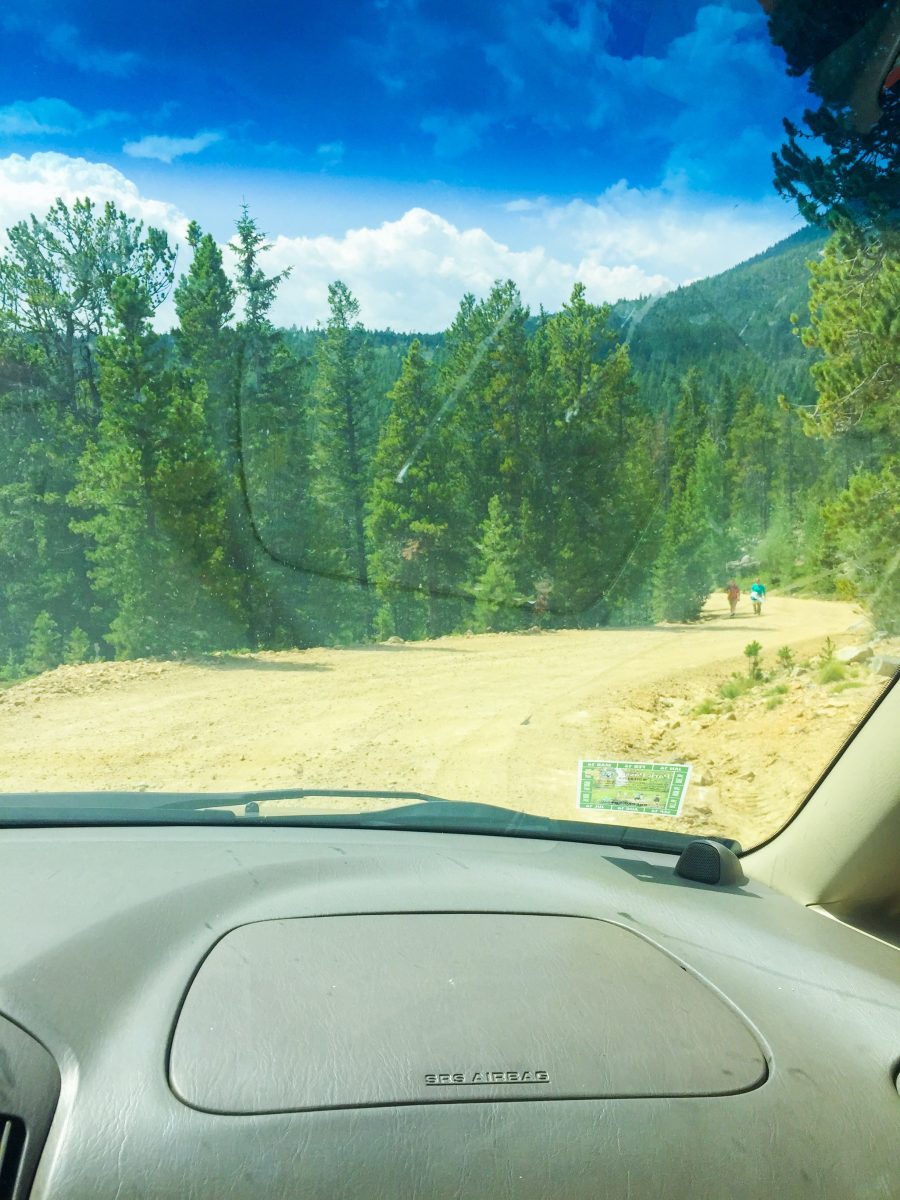
Golden Gate Canyon State Park is easy to get to from Denver. The drive is paved the entire way to the park. The road into Aspen Meadows is unpaved in sections but is flat, so you could easily take it on with a sedan.
If you have an annual state parks pass or if you bring $10 cash, you can drive directly to Aspen Meadows. There is a pay station at the campground and at the eastern park boundary on Gap Road. Unfortunately, neither pay station takes credit cards so come prepared with cash or a blank check (lol who has checks still). Otherwise, you’ll have to drive to the Visitors Center first, which is on the southeastern end of the park. This adds about 20 minutes.
Campsites
Aspen Meadows has several loops, none of which have electric hook-ups. If you’re tent camping at Golden Gate, it’s much more private and nature-y than Reverends Ridge Campground, so I prefer it.
Almost all of the campsites are described as “walk-in,” but unless you stay all the way at the back of the Conifer Loop, you aren’t walking more than 10 feet.
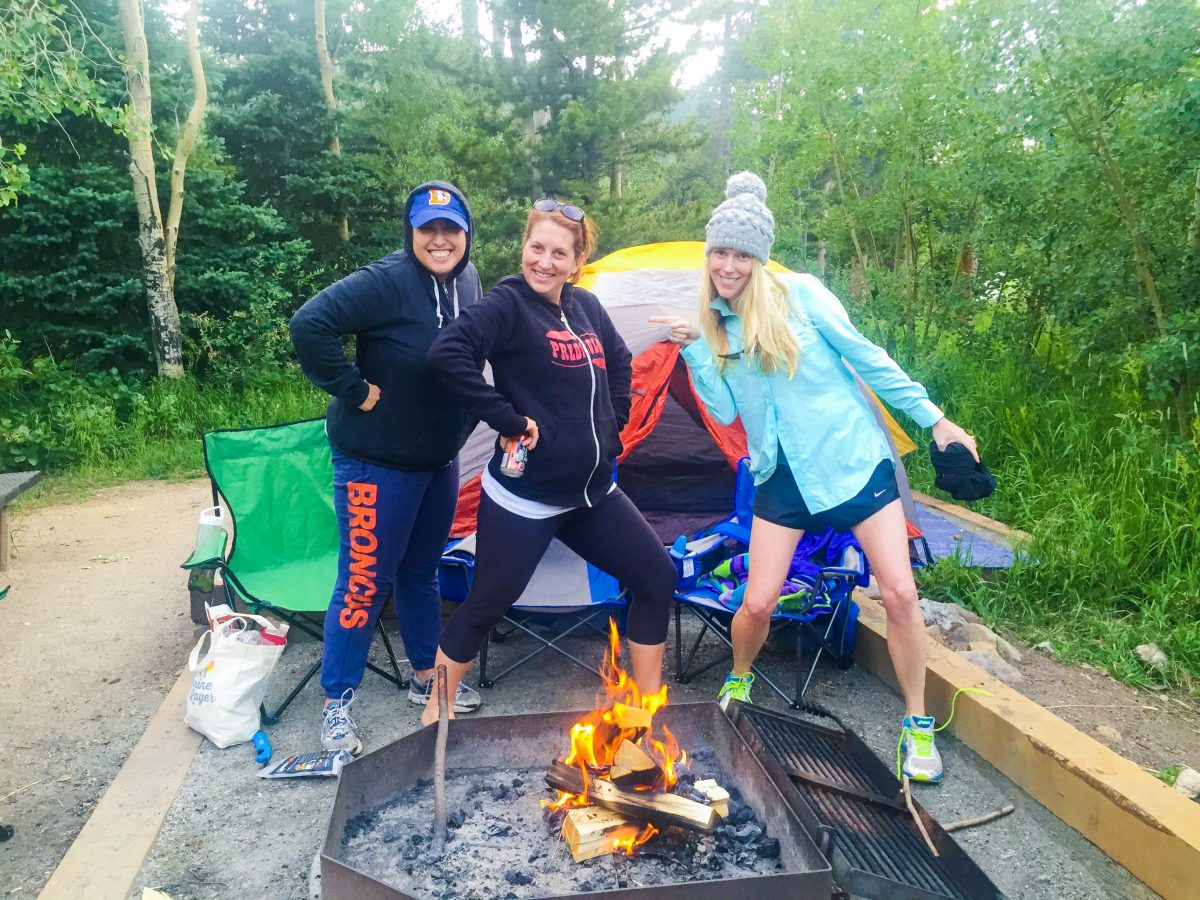
The first time I camped was with my husband. I interpret the term “car camping” to mean “jam EVERYTHING YOU COULD POSSIBLY NEED into the car and bring it all with you.” The second time, I went on a girls trip, and my friends take campground drinks and snacks VERY seriously. Needless to say, on both camping trips I had a LOT of stuff to haul in, and I never thought the walk into the campsites was unwieldy.
All the campsites have fire rings, picnic tables, bear boxes, and tent pads. Almost all of them are also well-shaded, and whoever planned the campground did a really good job of spreading the campsites out enough that you don’t feel like you’re on top of each other.
Conifer Loop
The Conifer Loop is at the bottom of the campground, so it’s the most secluded area. I’ve stayed in Site 29, which is the closest site to the parking area and the bathroom. It’s the shortest walk from the car plus you don’t have to smell the bathroom even though it’s nice and close. It’s well-shaded and still seems private even though you can see one other campsite.
If you don’t mind dragging your stuff another 20-30 yards, Sites 33 and 35 looked WAY cool and totally private/secluded.
There’s also a cluster of campsites (26-28) that are all right on top of each other, which would be great for a big group!
Meadow Loop
I stayed in Site 2 on the Meadow Loop for the girls trip, which was in this great little aspen grove surrounded by tall grasses that made us feel like we had the place to ourselves. Site 1 is *pretty* close, but we didn’t notice the people there until their kids kept running over to our tent to stare at us (a little creepy, but didn’t ruin things).
Meadow Loop also gets cell service since it’s up on the flatter part of the campsite, and also doesn’t require driving on any steep hills to get to. You’re further from being able to just walk up to a trail (the Mule Deer trail runs through the bottom part of the campground), but closer to hop in the car and get to Panorama Point. You’re also closer to the main road, which on the weekends does get a fair amount of cars driving back and forth.
Campground Fees and Reservations
Since Golden Gate is a state park, you’ll need a parks pass to get in. If you are a frequent flyer of our state parks system (at least 10 times per year), an annual $80 pass is the way to go since it gets you unlimited visits to any of the 41 state parks in Colorado. If you’re just starting out, opt for the $10 day pass.
Like I mentioned, the visitors center takes credit cards and cash. The pay stations on Gap Road do not take credit cards.
The campground costs $28 per night as of 2021, which is on the higher end of campgrounds, but it’s also a pretty awesome spot!
You absolutely have to make reservations ahead of time for the weekend. If you want your pick of campsites and loops, you’re looking at reservations in January and February. If you’re able to go on a weekday, as of August 2020, there were plenty of openings. We camped on a Tuesday night and the campground was *maybe* half full.
Toilet Situation
Very basic. Just a vault toilet, which I once heard a teenager described (in a horrified manner) as “just peeing into a HOLE!!!” That teenager wasn’t totally wrong, but it’s not that bad. It’s better than a port-o-potty, but not as good as the bathroom in your house.
There is no electricity or running water, so don’t forget a headlamp/lantern/other lighting option and some hand sanitizer.
Nearby Activities
The Mule Deer trail runs right by the Conifer Loop, so you can either start there and tackle as much as you want or drive a few minutes away to Panorama Point, where there is a great three-mile loop that’s beginner-friendly (purple on the below map).
My husband and I tackled a larger loop from the trailhead that left the campground. It ended up being at least six miles (yellow on the below map). It was tough but had beautiful views, taking you around Panorama Point, through aspen meadows and pine tree forests, through rockier sections, and eventually back to the campground. If you’re taking this on, I recommend bringing hiking poles.
You an also take a short stroll to Dude’s Fishing Hole from the campground, but it’s all uphill on the way back (but still only takes about 15-20 minutes). That’s the only bad part about Golden Gate’s trails – everything is very hilly! Just take plenty of breaks and bring lots of water. The Raccoon Trail around Panorama Point is also great for leaf peeping.
Other Intangibles
As someone who tends to forget things, the mini-mart on Highway 119 is a total lifesaver. Plus, you can get gas and firewood there. It’s not only convenient, but just helps me feel more at ease about being out in the wilderness, since you’re really not too far away from anything if you forget or run out of supplies.
If you go hiking after packing up camp, stop at Woody’s in Golden for amazing pizza, beer, and mac and cheese (there are other options but those are my favorite post-hiking treats).
Overall Impression
You can’t beat Aspen Meadows access to the real world and beautiful scenery. Plus, Golden Gate is at about 8,000 feet of elevation, making it way cooler than the city (at least 15 degrees typically!). With hiking conveniently located and high-quality campsites, it’s the perfect weekend getaway.
When you think Greek islands, you think Santorini. Your next thought may be white houses, cliffs, sunsets…but hiking? Yeah, hiking didn’t come to mind when we first decided to go to the Greek islands for our honeymoon, either, but I was really excited to find out there are some really spectacular trails.
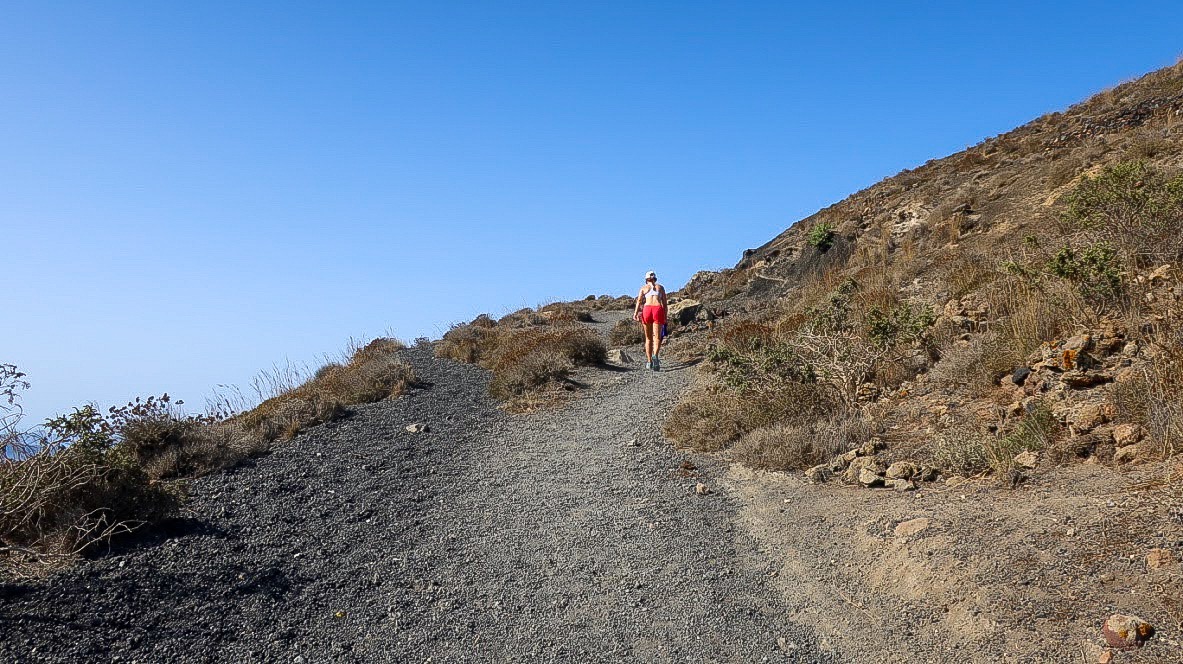
Santorini’s Caldera Path was a hiking highlight for us, with six miles of ridiculous views, cool villages and towns, and a giant nutella crepe waiting for me at the end. If this is the only walking you do on Santorini, I would highly recommend our tour guide Nikos Boutsinis.
We took a walking tour with Nikos the day before hiking the Caldera, opting for Nikos’ Santorini Wanderlust tour that took you through the town of Pyrgos to talk about Santorini’s history, architecture, and culture. We not only had so much more historical context to do the Oia to Fira hike, but also got some local intel from Nikos on the best way to do it. Namely, don’t start in Oia!
We followed Nikos’ advice to hike the Caldera from Fira to Oia since we were staying in Oia. This was (unsurprisingly) spot on because we were BEAT after the hike and I can’t imagine having to then wait for a bus, pack on with other sweaty people, do the 15-minute drive back to Oia, and then walk back to our hotel room. I would have just asked Billy to leave me at the bus stop to die.
Since Fira is also the southern end of the path, and you hike northwest from there, the sun is at your back instead of blasting you in the face. Santorini is really effing hot, so that made a huge difference, as did starting as early as possible. We took the first bus to Fira at 7:30 a.m.
FYI all the school-aged kids also take the first bus to Fira at 7:30 a.m. and the bus driver gives zero effs about “safety” or “how many people can actually fit on this bus.” Be prepared to become intimately familiar with random teenagers and your fellow tourist passengers.
We envisioned a peaceful ride, sitting in the comfy charter bus seat, applying sunscreen like we’d had on all the other buses we’d taken on the islands. No. This was the opposite. But the bus was dirt cheap so we couldn’t complain too much.
Neither of us can read Greek, but as far as we could tell, there were no signs pointing you toward the Caldera path. We just headed uphill from the bus stop, toward the coastline. Overall, signage is not great but as long as you follow the path closest to the water on your left, you’ll be fine.
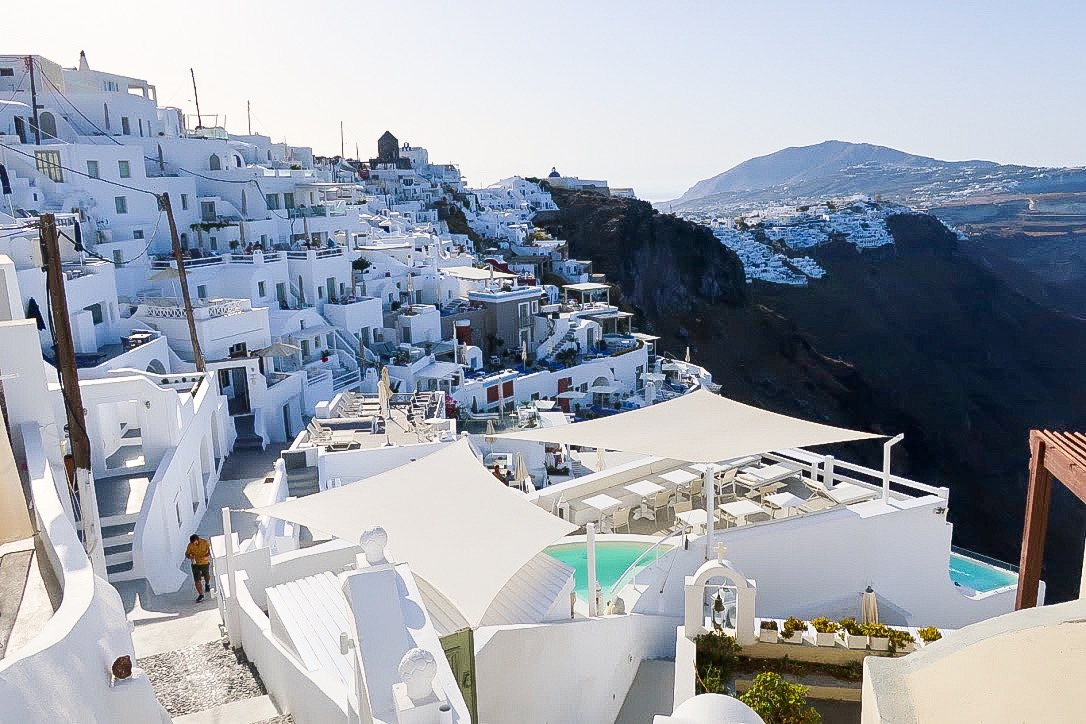
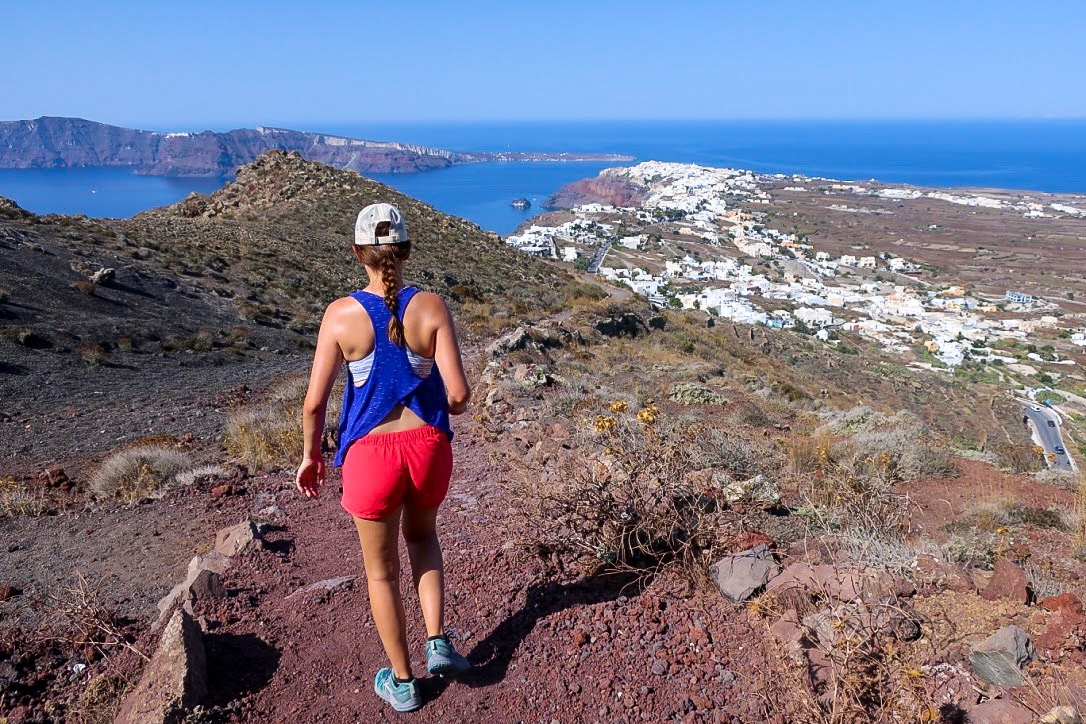
The Caldera path winds its way through Fira, Firostefani, Imerovigli, and ultimately Oia in addition to plenty of pretty countryside. The views the entire time are stunning, and it’s nice to pass through towns for a bathroom break, more water, and at least one Snickers ice cream bar.
But let’s be real, six miles is a long ass way to walk. So is it beginner-friendly?
I had done almost zero physical activity for the month prior to our honeymoon, unless you count dancing my pants off at the wedding. I do walk around my neighborhood a lot and bike to work about three times a week, so I like to think I had a good baseline. I also was really excited about the hike, even though I knew it was going to be hard.
And it was. The beginning of the walk had been pretty flat, with a bunch of shade mixed in with scenic views. But there are two really steep stretches later on, and to be totally honest I was pretty over it at the second gigantic hill. I was SO HOT and getting grumpy because I was struggling.
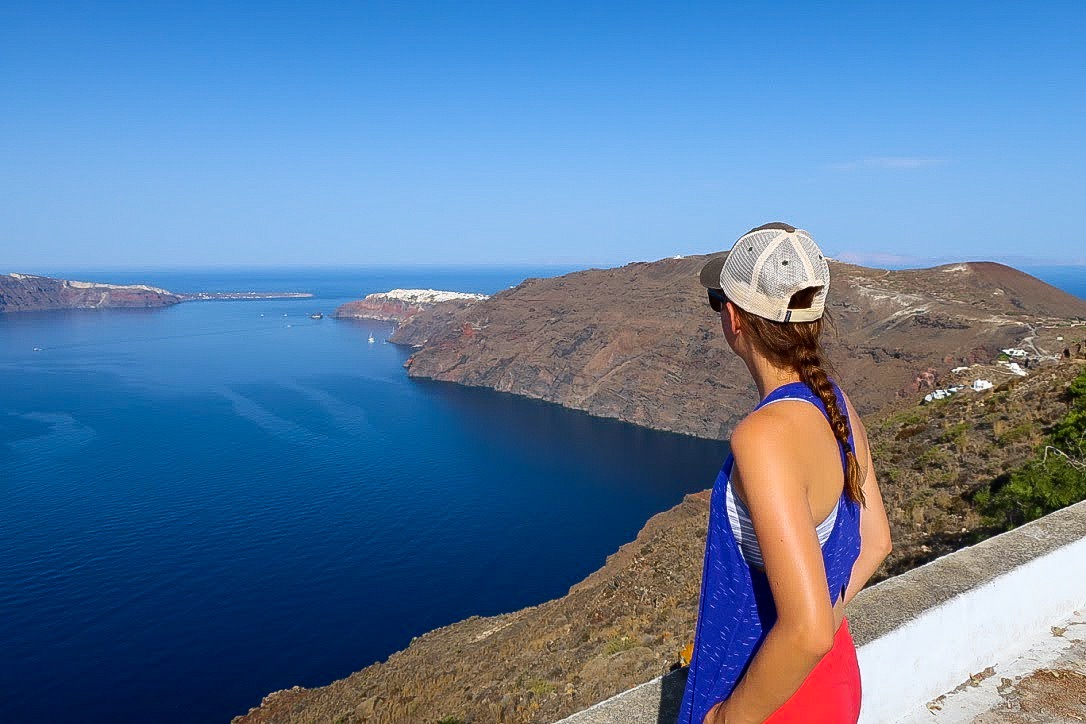
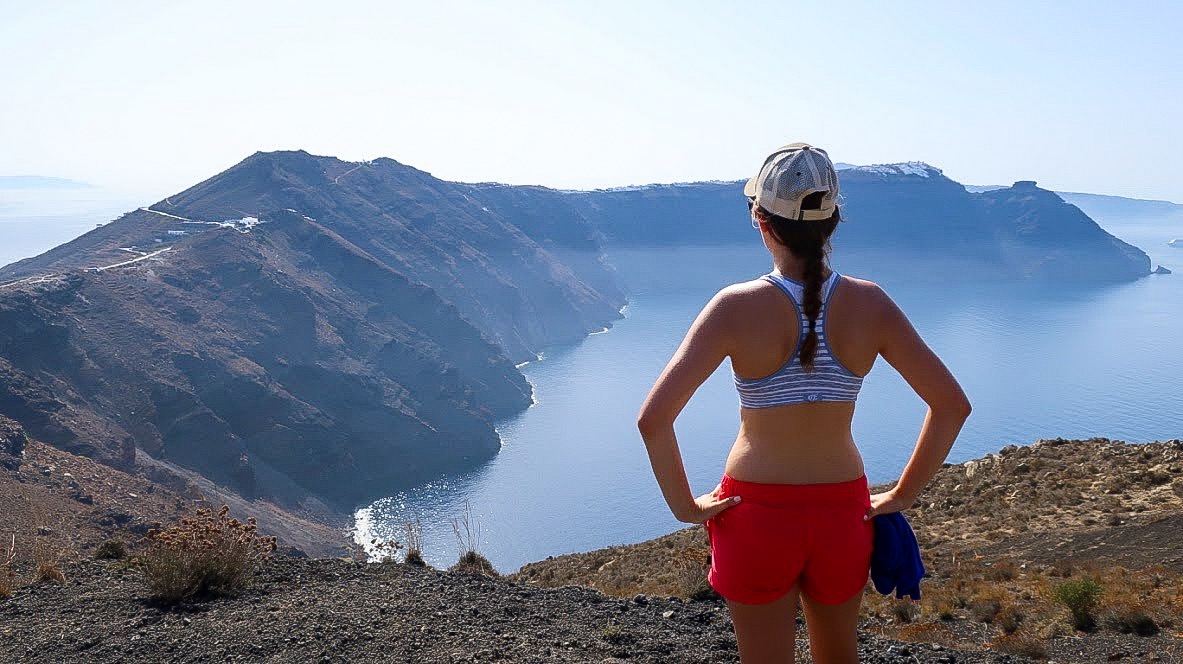
But then we got to this view and I remembered why I wanted to do this. Santorini is unique; the famous caldera (or cauldron) was formed because of a gigantic volcanic explosion, when much of the island sank under the weight of all the ash. What was left behind are dramatic cliffs around a crescent-shaped bay, and it was one of the coolest things I’ve ever seen. Yes, you’ll be tired, you’ll be hot, but you’ll never regret this hike. It’s amazing.
Plus, right around the poing where you’re like, “Okay these views are cool but I CANNOT go uphill any longer,” there’s a church. Aka a place to sit. IN THE SHADE. We had plenty of company in other sweaty, exhausted people which reassured me that I wasn’t the “only one” having a hard time with this. After a few more minutes, my spirits had risen. I could see Oia, our final destination, and I could almost taste the celebratory sparkling lemonade.
(Seriously, how have I missed out on sparkling lemonade all this time? It’s life-changingly good. On a related note, it is a small miracle I did not have any cavities when I went to the dentist after this trip.)
Overall, the walk was hard. It was sweaty. It took a long time. But the views were insane, and it felt so good to accomplish something that difficult and cool.
If you’re not up for the whole path, you can just do part of it. In that case, I would recommend starting in Oia, walking just past the aforementioned church to the Caldera overlook and then turning back around. Regardless, if you’re planning a trip to Santorini, don’t miss walking at least part of the Caldera. And take a tour with Nikos!
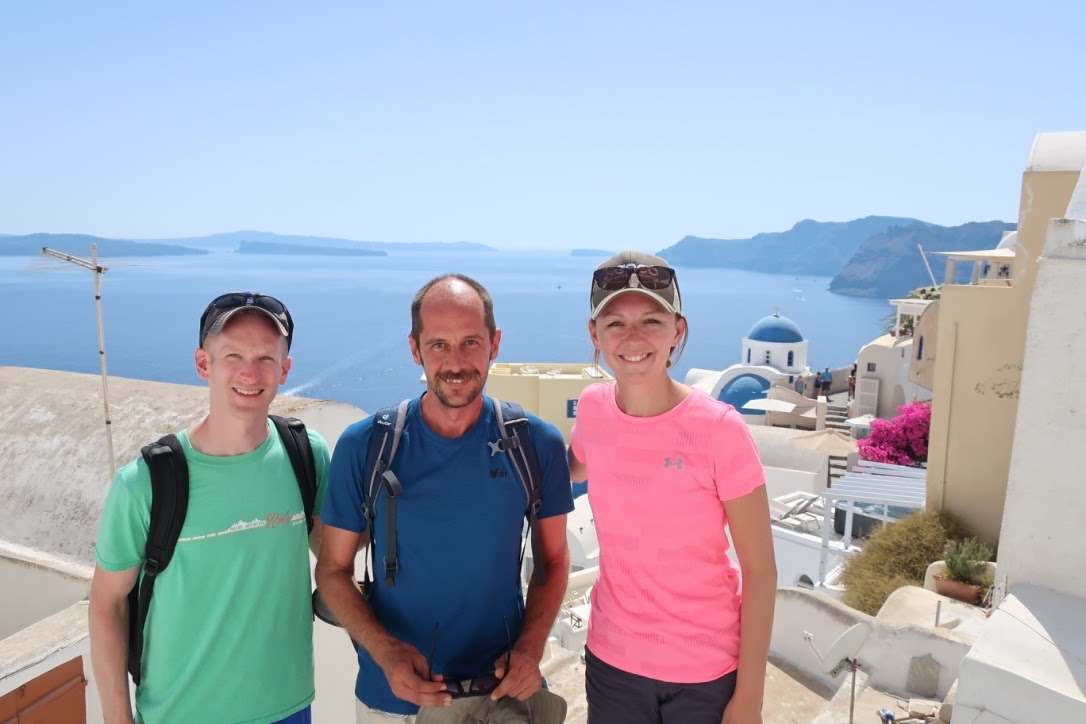
Billy, Nikos, and me at the end of our Santorini Walking Tours trip. Nikos is the best!!
A few years ago, I went on a health kick. I decided I was going to be “one of those people” who worked out every day before work. That was also the year I realized I may not be as much of a morning person as I once thought. For the sake of my relationship and sanity, I quickly flunked out of my self-induced morning boot camp.
Fast forward a bit and here I am training for my first 10k, quickly learning that I’m not much of a lunch break runner either. With my weeknights packed, and serious lack of motivation after 3 p.m., I realized I only had one option: go back to the morning.
Getting up early sucks. Waking up in the dark sucks. It’s SO EASY to hate exercising first thing (and therefore never actually do it). So how did I turn into someone who wakes up at 6 a.m. every week to run before work?
I started small. VERY small.
One of the biggest mistakes I think beginner runners make is assuming they have to do a BIG THING to go run. If I had started out saying, “I’m going to run a 5k!” or, “I’m going to do this three times a week!” I never would have started.
Instead, I thought of the smallest possible thing I could do to increase the likelihood I would actually drag myself out of bed to try it. I settled on 2.5 miles on Tuesday mornings (because who wants to wake up early on a Monday) in my neighborhood.
I only have to get up early one time out of the week, I know I can run 2.5 miles around my neighborhood, and I don’t have to drive anywhere to go do it. Is it very long? No. Is it very often? Definitely no. But it’s manageable. If I get up at 6 a.m. to run 2.5 miles on Tuesday, I’ve accomplished my goal for the week.
I can sleep in every other morning and not beat myself up for “failing” at what I set out to do (which, really, is just to run more often. Once is more often than zero times). So I will likely do it next week. And then I will feel ~really cool~ for being an early morning runner and keep doing it every week.
(I’d like to say this isn’t actually what happened, but I have started feeling very proud of myself when I’m one of like five people outside in my neighborhood that early, which has been really helpful motivation)
Pick out your clothes the night before.
This is in basically every advice column about how to get up early to exercise, and with good reason.
Automating your morning routine makes it much harder to back out, or dawdle around for so long that you all of a sudden “don’t have time” to go for a run anymore, so you roll around for 10 minutes on a yoga mat before telling yourself you “did some good stretching” this morning (totally not speaking from experience).
On Monday nights, I check the hourly forecast and decide what to wear. I set out everything. Every accessory, from socks and a sports bra to my reflective gear and headlamp. Every layer I plan on wearing. What I’m going to change into for work after.
I don’t wander around my house in the morning looking for things, I just get up, drink some water, get dressed, and get out the door.
Be kind to yourself and give yourself permission to experiment.
I’m not always very good at exercising in the morning because I have what some may call a “delicate system.”
Too much food, I get cramps (also, if I spend too much time in the house I am not going to make it out). Too little food, I get woozy.
The morning of my first 6 a.m. run, I gulped down some water and put a protein bar in my pocket for emergencies. I told myself if I started feeling like I was going to faint, I would just stop, eat the protein bar, and walk back home.
That moment never came, so I realized that a small glass of water is all I need before heading out. For you, it may be something different (a spoonful of peanut butter or a banana have also worked well for me), but give yourself permission to just try and see how it goes before insisting that you can’t do something.
And finally, don’t force it.
Maybe you do like running at night. Maybe your lunch break runs are just swell. Maybe you’ve tried all my tips and it still is awful and terrible to run in the morning.
You’re not a failure, it just means you need to try something else. Forcing it will not work, inevitably leading to you blaming yourself for being a “failure” because you weren’t able to commit to waking up early and going running.
So live your truth….and let me know how it goes. If these tips are crap, I want to know what works for you instead!





 Outdoor Beginner